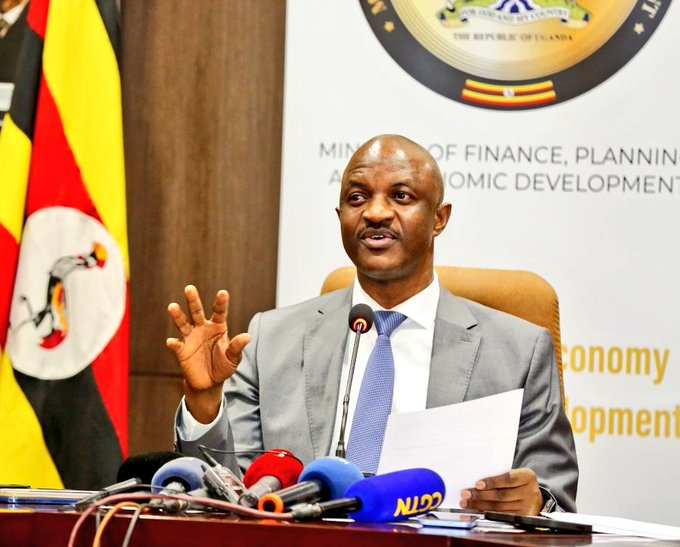
KAMPALA — A top Ugandan finance official has highlighted the country’s ongoing challenge with financial inclusion, noting that only a small fraction of Ugandans are able to access loans from commercial banks.
Ramathan Ggoobi, the Permanent Secretary/Secretary to the Treasury at the Ministry of Finance, Planning and Economic Development, said that formal credit access remains limited for most Ugandans and emphasized the need to expand opportunities for borrowing and credit access.
Although the Treasury has not published an exact national figure in recent speeches online, surveys and financial sector reports consistently show that formal borrowing from banks is extremely low in Uganda—typically fewer than 10 percent of adults use bank credit, and even smaller percentages actually borrow from commercial banks.
According to the FinScope 2023 survey, only around 14 percent of adult Ugandans use bank services, and a much smaller share can access loans through these institutions. Other research has indicated that barriers like lack of collateral, high interest rates, and stringent lending requirements limit access to traditional bank credit, so that formal credit from banks reaches fewer than 10 percent of the adult population.
These statistics reflect broader financial inclusion challenges in Uganda. While many adults — more than half — now access financial services like mobile money accounts, access to traditional credit remains limited.
In recent years the government and Uganda’s financial sector regulators have introduced measures aimed at improving access to credit for households and small businesses, including expanding credit information sharing and strengthening microfinance institutions.
Speaking on the limitations in formal borrowing, experts note that collateral requirements and high interest rates continue to exclude most low income earners and small enterprises from bank loans, forcing many to rely on informal lenders or savings groups instead.
Treasury officials like Ggoobi continue to advocate for reforms that will broaden access to affordable credit, which policymakers argue is key for business growth, investment, and economic expansion in Uganda’s largely youthful and informal economy.