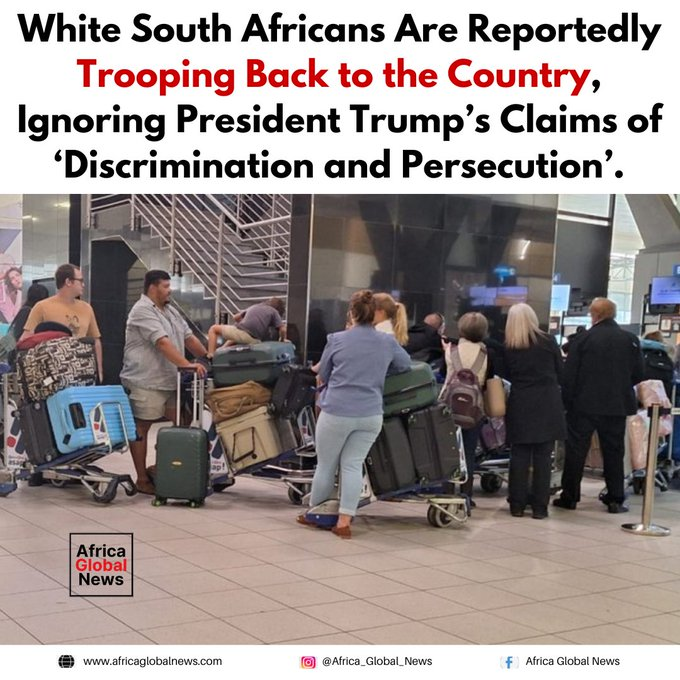
Johannesburg / Washington, D.C., March 2026 — Several white South Africans who once left their homeland — including some who moved to the United States under a controversial refugee program — are now reportedly choosing to return to South Africa, even as former U.S. President Donald Trump continues to assert that they face persecution there.
The Trump administration’s programme, launched in 2025, brought about 3,500 white South Africans to the U.S. as refugees, focusing mainly on Afrikaners (a white minority group descended from Dutch settlers) who were said to be escaping racial discrimination. But many of those who relocated — and others living abroad — now say their decisions to return home are driven by practical life considerations, not fear of persecution.
Quality of Life & Practical Reasons Behind Returns
Several returnees and prospective returnees list quality of life improvements, lower living costs, stronger family ties and better schools as key factors in their decisions:
• Lower living costs and closer family connections in South Africa are cited by many as reasons they’d rather live there than abroad.
• Some returnees, including long-term expatriates, say they prefer South African life for their children’s upbringing and schooling, even if the U.S. offered economic opportunities.
• Others emphasise safety concerns in the U.S., pointing to issues like mass shootings and social instability, something many found unsettling after relocating.
Backlash Against Persecution Narrative
Critics of Trump’s claims note that the South African government denies there is any state led persecution of white citizens and disputes the idea that returning would put them at risk. Some commentators argue that if genuine persecution were widespread, those who fled wouldn’t choose to come back voluntarily.
Local commentators have described the situation as a mismatch between political rhetoric and on the ground reality, saying many expatriates’ return decisions are “ordinary life decisions,” not evidence of security threats or targeted discrimination.
Government & Community Reactions
South African officials have acknowledged the trend of returnees and say many are reclaiming citizenship and reintegrating, encouraged by improved conditions at home. However, debates continue about both the long term effects of the U.S. refugee programme and its implications for perceptions of South Africa abroad.
As the story unfolds, analysts say this movement highlights a complex mix of economic considerations, personal safety calculations and family priorities — and that returning home doesn’t necessarily align with the narrative that white South Africans are fleeing persecution.