KAMPALA — Uganda has hosted its first-ever women-focused film festival, the Leesu Film Festival 2026, bringing together filmmakers, creatives and youth advocates to celebrate female storytelling in the country’s growing creative industry.
Organised by youth-led nonprofit Reach A Hand Uganda, the festival took place on March 7 at the organisation’s headquarters in Lungujja, Kampala, under the theme “Her Story, Her Lens.” The event showcased short films created by young women as part of the Leesu FemPower Fellowship and was held ahead of International Women’s Day.
The festival marked the culmination of a year-long mentorship program that supported seven young female filmmakers to develop and produce short films addressing issues such as sexual and reproductive health rights, economic empowerment and gender-based violence.
Six films premiered during the event, including Village of Echoes by Nadia Mwebe, Dissolved in Sweets by Sandra Agricola, Still Standing by Driberayo Constance, The Get Away by Karungi Sheila, When It’s Me by Joy Athieno and Chains of His Voice by Nabawanga Olivia.
Speaking at the event, Reach A Hand Uganda Chief Executive Officer Humphrey Nabimanya said the initiative was created to ensure young women have a platform to tell their own stories through film.
“The Leesu project began as a way to highlight women’s issues, but we realized young women’s voices were often missing. Leesu focuses on them, giving them a platform to tell their own stories,” Nabimanya said.
He noted that storytelling through film can help spark conversations around gender-based violence and other challenges affecting young women in Uganda.
One of the highlighted films, Dissolved in Sweets, explores the hidden dangers faced by girls working in sugarcane fields in eastern Uganda.
“This is a real-life story of one of my relatives who was raped in the sugarcane,” said producer Sandra Agricola, explaining the inspiration behind the film.
Industry stakeholders also used the platform to encourage more women to join the film sector.
Dr Jessica Ahibisibwe, a member of the Uganda Producers Guild, said filmmaking requires persistence but offers opportunities for economic empowerment.
“Film is a lonely journey with lots of rejection, but it is also full of opportunity. No one will hand you a silver platter—you have to create it yourself through skill and determination,” she said.
Similarly, film producer Nana Kagga, vice president of the Uganda Producers Guild, said the industry remains male-dominated and called for greater participation of women in production roles.
“Film remains largely male-dominated. We must normalize more women producers and encourage more women to occupy these spaces,” she said.
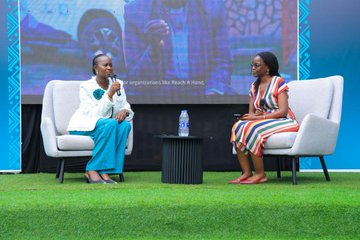
The festival also featured panel discussions, networking sessions, awards and performances aimed at strengthening collaboration among young creatives.
Among those who attended the event was Hon. Lenia Charity, who praised the role of young creators in shaping Uganda’s cultural and economic future.
“The creative industry is a powerful but often underestimated force in national development. If we invest in young creators by improving access to funding, infrastructure, training and copyright protection, we unlock immense potential for employment, innovation and cultural pride,” she said in a post on X.
The Leesu initiative builds on the Leesu FemPower Project, launched by Reach A Hand Uganda in partnership with Sauti Plus Media Hub to train and support young female filmmakers to produce stories addressing gender inequality, health and social issues.
Organisers say empowering young women to tell their stories is critical in Uganda, where reproductive health challenges remain significant. Data from the Uganda Demographic and Health Survey indicates that about one in four girls aged 15–19 is either pregnant or already a mother, underscoring the importance of platforms that amplify young women’s voices.
Through the festival and the fellowship program, organisers hope to nurture a new generation of female storytellers who can use film not only as an art form but also as a tool for advocacy and social change.