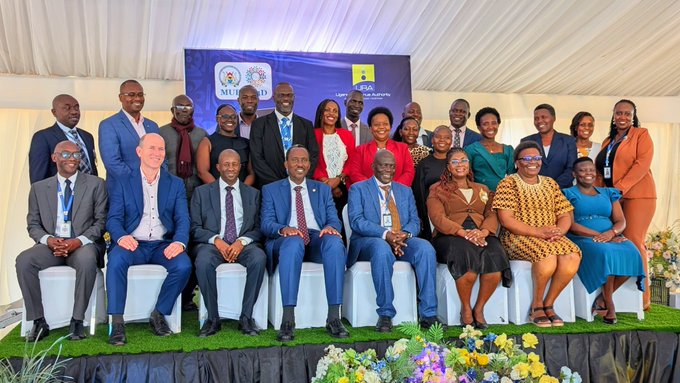
Kampala — Makerere University Business School (MUBS) and the Uganda Revenue Authority (URA) jointly celebrated the Certified Knowledge Manager for Sustainable Development (CKM4D) – Cohort 5 at the URA Headquarters in Nakawa on March 12, 2026.
The event marked the awarding of certificates to six URA staff, their admission into the KM4PAdU Community of Practice, and the signing of a collaboration agreement between MUBS and URA aimed at strengthening knowledge management and sustainable development initiatives.
Speaking at the ceremony, Prof. Moses Muhwezi, Principal of MUBS, emphasised the role of universities in equipping public institutions with skilled human capital.

“Universities play a critical role in national development through quality business, leadership, and management education. We must make education practical by involving professionals, like URA staff, in academic processes to ensure that research and training address real-world challenges,” he said.
Prof. Muhwezi further highlighted Africa’s limited contribution to the global knowledge base, urging scholars to increase research output and impact. “Knowledge remains a key driver of prosperity and development,” he noted, calling for greater use of technology to disseminate knowledge widely.
URA Commissioner General, John Musinguzi Rujoki, also lauded the partnership, noting that “knowledge drives innovation, influence, and effective governance. This collaboration will strengthen research, support policy development, and promote fair taxation, while empowering taxpayers and enhancing transparency.”

The ceremony featured reflections on the Knowledge Management Certification Programme, presentations on the URA K4D Challenge 2025 projects, and discussions on practical applications of knowledge management in public service delivery.
The event underlined the growing importance of collaboration between academia and government institutions in promoting sustainable development, impactful research, and capacity building for Uganda’s public sector.