Kampala — Confusion and backlash have emerged over proposed changes to Pay As You Earn (PAYE) tax rates, with many Ugandans mistakenly interpreting the reforms as a new tax burden amid rising living costs.
The Ministry of Finance, Planning and Economic Development has proposed adjusting PAYE thresholds for the first time since 2012, raising the tax-free income band from Shs235,000 to Shs335,000 per month to reflect inflation.
Officials say the move is intended to ease pressure on low-income earners, even though it will cost government an estimated Shs96 billion in forgone revenue.
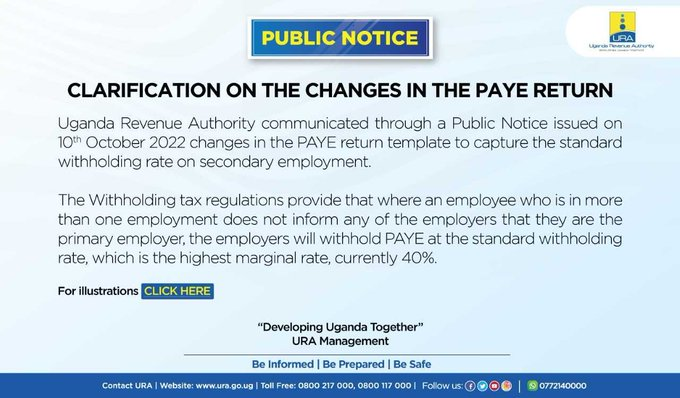
“The proposal is not introducing a new 40% tax rate — that has always been part of the PAYE structure,” a finance ministry official explained. “What is changing is the threshold, to ensure fairness given inflation over the years.”
Under the current structure administered by the Uganda Revenue Authority, the top marginal tax rate of 40% applies to monthly incomes above Shs10 million — a provision that has existed for years but is now being more clearly defined in the revised schedule.
Social Media Backlash Driven by Misinterpretation
The proposals have triggered widespread debate online, with some users claiming the government is introducing harsher taxes on workers already grappling with high living costs.
However, tax analysts and commentators say much of the criticism stems from misunderstanding how Uganda’s progressive tax system works.
“The only change is in regard to the threshold from Shs235,000 to Shs335,000,” one analyst noted in widely shared commentary. “In fact, the proposal shows that government is going to lose revenue of Shs96 billion.”

Others pointed out that the revised structure could actually reduce tax liability for some higher earners, as a larger portion of income will fall within the zero-tax band.
MPs Demand Broader Relief
Despite the clarifications, some lawmakers argue the reforms do not go far enough to cushion low-income earners.
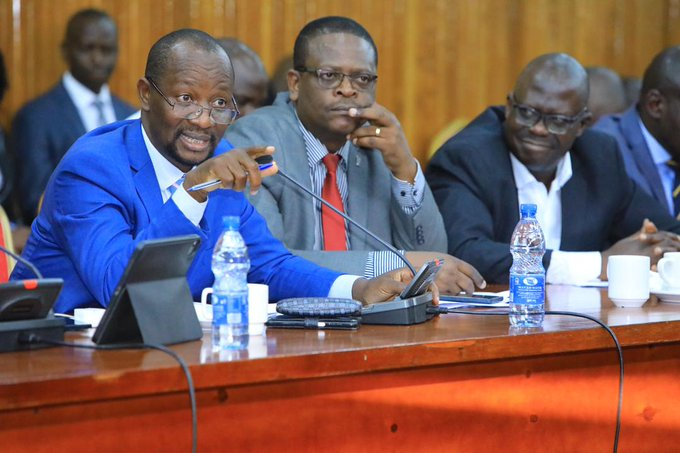
Kira Municipality MP Ibrahim Ssemujju Nganda has called for a more substantial increase in the tax-free threshold.
“We should be looking at exempting incomes below Shs400,000 if we are serious about supporting ordinary Ugandans,” Ssemujju said, arguing that the current proposal does little to address the cost-of-living crisis.
He also raised concerns about fairness in the taxation of salaried workers, particularly those with multiple sources of income, where secondary employment is often taxed at higher rates.
Budget Debate Looms
The proposed PAYE adjustments are part of broader tax policy changes expected to be considered by Parliament ahead of the national budget in June.
Economists say the debate highlights the growing tension between the government’s need to raise domestic revenue and public demand for relief from rising prices of essential goods such as fuel, food, and housing.
As discussions continue, officials are urging the public to seek accurate information and understand the progressive nature of PAYE taxation to avoid unnecessary panic.
The final decision on the proposed changes will be made as part of the 2026/27 budget process.