The government has released UGX16.537 trillion to finance expenditure for the third quarter of the 2025/2026 financial year.
The money will cover expenditures of ministries, agencies and other Government entities for January, February and March 2026.
The economy continues to show resilience and strong growth, even during an election year, with export earnings, foreign investment, and remittances driving historic gains, the Ministry of Finance has reported.
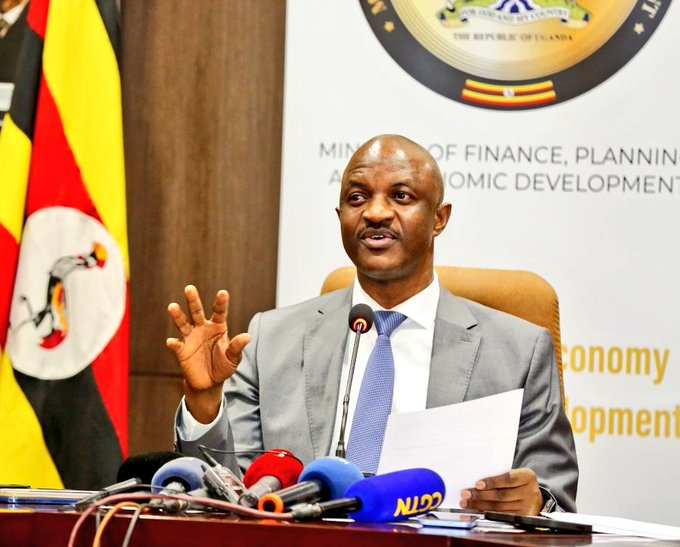
During the Q3 FY 2025/26 press briefing, Permanent Secretary and Secretary to the Treasury, Dr Ramathan Ggoobi, highlighted that Uganda earned USD 13.4 billion from exports of goods and services in FY 2024/25, including USD 10.6 billion from goods alone. By November 2025, exports of goods reached USD 12.79 billion.
As a result, Uganda recorded a Balance of Payments (BOP) surplus of USD 2.37 billion for the year ending October 2025, compared to a deficit of USD 683 million a year earlier—the highest surplus in 15 years. The surplus was supported by an all-time high financial account surplus of USD 5.6 billion, driven by strong foreign direct investment (FDI) of USD 3.5 billion and portfolio inflows of USD 1.7 billion.
Remittances from Ugandans abroad reached USD 1.6 billion (Shs 5.76 trillion) in FY 2024/25, up from USD 1.1 billion in FY 2020/21, while tourism earnings hit USD 1.7 billion, boosted by peace, strategic infrastructure, and government-led economic diplomacy.
Dr Ggoobi noted that business sentiment remains high despite the election year, with the Business Tendency Index at 57.2, the Composite Indicator of Economic Activity at 183.5, and the Purchasing Manager’s Index at 53.8, all above their respective thresholds.
Expenditure planning for Q3 FY 2025/26 prioritises fiscal discipline, maintaining law and order, election-related spending, operational costs for ministries and local governments, and continued funding for wealth creation and critical sectors such as health, education, and infrastructure.
Uganda’s GDP growth stood at 6.3% in FY 2024/25 and is projected at 6.5–7% this year, with medium-term double-digit growth expected. The economy is projected to reach USD 68.4 billion (Shs 249.4 trillion) this financial year.
Inflation remained stable at 3.1% in November and December 2025, marking the lowest in Africa over the past decade. The Uganda Shilling also strengthened, appreciating 2.45% against the US dollar for the year ending December 2025, making it one of the most stable currencies globally.
Dr Ggoobi attributed the stability to prudent economic management, strategic investments in food production, effective monetary policy, and direct fuel importation by UNOC, which together have kept prices stable and the exchange rate strong.
“This impressive state of the economy is unlike previous election years, which were largely characterised by inflation and volatility. It reflects close coordination between monetary and fiscal policies,” he said.