
Uganda’s economy has continued to demonstrate strong resilience despite global uncertainties, with solid growth, stable prices, and robust investment inflows, the Ministry of Finance has reported in its Pre-Election Economic and Fiscal Update.
The update, published in line with the Public Finance Management Act (PFMA Cap. 171, Section 18) ahead of the January 2026 general elections, shows that Uganda’s GDP grew by 6.3 percent in FY 2024/25.
This performance was supported by coordinated fiscal and monetary policies, stable inflation, a strengthening Uganda Shilling, and record export earnings from coffee and industrial products.
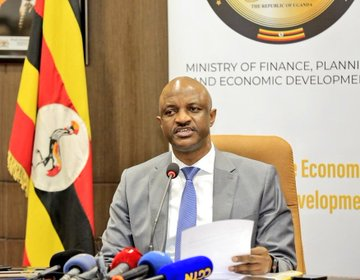
Dr Ramathan Ggoobi, Permanent Secretary and Secretary to the Treasury, said the government is committed to maintaining macroeconomic stability. “With stability preserved, economic growth is projected at 6.6 percent in FY 2025/26 and is expected to exceed 7 percent over the medium term,” he said.
Key sectors driving growth include industry, agriculture, services, and oil and gas, with sectoral initiatives such as the Parish Development Model, Emyooga, and capitalisation of the Uganda Development Bank supporting production, productivity, and private sector development.
The update also highlights foreign direct investment (FDI) of USD 2.98 billion in FY 2024/25, remittances from the diaspora of USD 1.57 billion, and tourism earnings of USD 1.57 billion, all representing record highs. Foreign exchange reserves strengthened to 3.7 months of imports by September 2025.
On election preparations, the Ministry has allocated and released Shs 1,116.72 billion to key agencies since FY 2023/24, including Shs 606.59 billion to the Electoral Commission, to ensure smooth conduct of the polls.
Dr Ggoobi said, “The Ministry remains committed to providing sufficient resources to ensure all Ugandans can exercise their democratic rights in a peaceful and secure environment.”
Despite a slight fiscal deficit of Shs 4,159.41 billion in the first quarter of FY 2025/26 due to revenue shortfalls and higher development spending, the overall outlook for the economy remains strong, with continued investment in infrastructure, human capital, agro-industrialisation, and tourism.