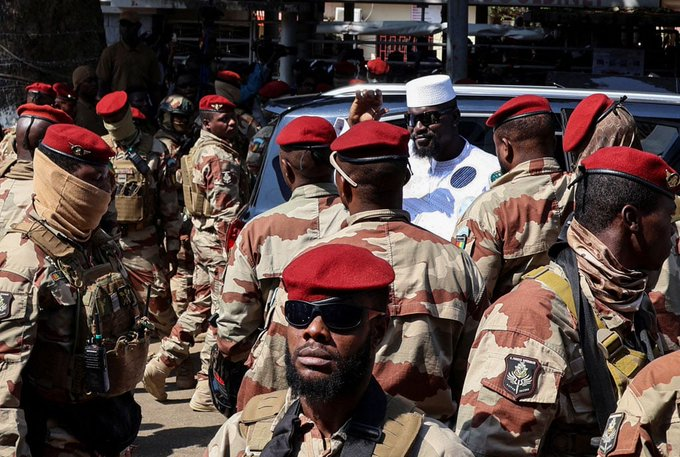
Conakry, Guinea — Mamady Doumbouya, the former coup leader who seized power in Guinea in September 2021, has been declared the winner of the country’s presidential election, according to provisional results released Tuesday by the General Directorate of Elections.
Doumbouya secured an overwhelming 86.72% of the vote in the December 28 poll, giving him an absolute majority and avoiding a runoff.
The provisional results showed Doumbouya far outpacing his closest rival, Abdoulaye Yero Balde, who received roughly 6.6% of the vote, with other candidates trailing further behind. Around 80.95% of the nation’s approximately 6.8 million registered voters reportedly participated. The Supreme Court now has eight days to validate the results amid possible challenges.
The election marks the first presidential vote since Doumbouya’s military takeover of President Alpha Condé’s government in 2021, an event that reshaped Guinea’s political landscape and positioned Doumbouya as the head of a transitional junta.
Under a new constitution approved in a September referendum, the ban on former junta members running for office was lifted and presidential terms were extended, clearing the way for Doumbouya’s candidacy.
Criticism and Political Context
While authorities have described the election as a key step toward restoring constitutional governance, the campaign was contested by opposition parties and civil society groups. Critics say major opposition figures were sidelined, exiled, or barred from running, and that political freedoms—including the right to protest and press independence—were restricted during the electoral period. United Nations human rights officials noted constraints on demonstrations and media activity, and some opposition candidates alleged intimidation and irregularities in the voting process.
Observers also pointed to a broader regional trend of military involvement in politics, with several West and Central African nations experiencing coups and transitions under similar circumstances in recent years.
Doumbouya’s supporters, however, have emphasised economic initiatives such as advancing Guinea’s vast mineral-rich projects, including the Simandou iron ore development, as evidence of his leadership focus.
At just over 40 years old, the former special forces commander now begins a seven-year presidential mandate amidst both domestic debate over democratic integrity and international attention on Guinea’s political trajectory following years of political upheaval.