The Uganda National Examinations Board (UNEB) has reported continued growth in Primary Leaving Examination (PLE) candidature alongside improved performance at the Grade One pass level, even as concerns persist over learner drop-outs.
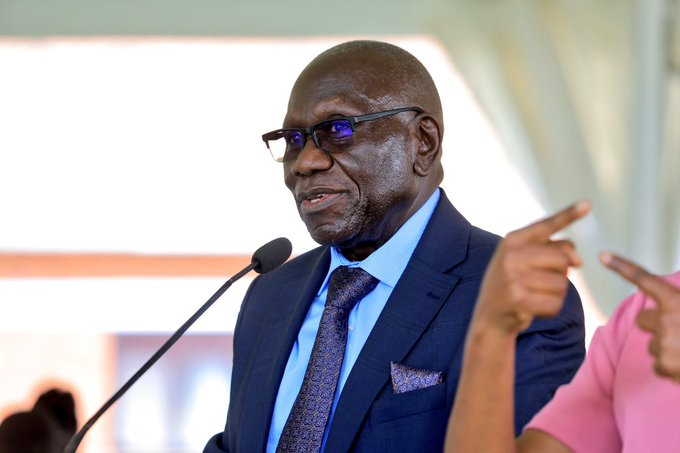
Speaking during the release of the 2025 PLE results at State House, Nakasero, UNEB Chairperson Prof. Celestino Obua said the number of candidates sitting the examination has steadily increased, while absenteeism has remained stable at 1.3 percent over the last two years.
“Candidature has continued to rise, while absenteeism has remained steady at 1.3 percent over the last two years. However, any drop-out is a cause for concern,” Prof. Obua said.
He noted that efforts were underway by the Ministry of Education and Sports to establish the underlying causes of learner drop-outs, as had been pledged previously.
According to Prof. Obua, performance at the Grade One pass level in the 2025 PLE improved compared to the 2024 examination, enabling more candidates to qualify for the next cycle of education.
“Overall, more candidates have qualified to proceed to the next level or cycle of education than was the case in 2024,” he said.
He expressed confidence that all 730,000 learners who passed and were graded would secure placement in secondary schools and vocational institutions, citing the government’s continued expansion of post-primary education opportunities.
For the second year running, UNEB conducted an item analysis of the four PLE examination papers to assess the proficiency levels attained by learners, an initiative Prof. Obua said supports Uganda’s transition to a competency-based curriculum.
“This initiative aligns well with the country’s paradigm shift towards a Competency-Based Curriculum and assessment. The analysis will henceforth be conducted and reported annually,” he said.
Findings from the analysis indicated that teachers require substantial capacity-building support to effectively interpret the curriculum and adapt their teaching methods to competency-based assessment demands.
Over the past two years, UNEB identified two local governments with the lowest achievement levels and provided targeted capacity-building support to selected teachers in those areas.
“Subject to the availability of funds, this intervention—modest as it may be—will be sustained as a contribution to complementary initiatives undertaken by the Ministry through its various agencies,” Prof. Obua said.