A proposed $5.3 billion “Smart Coffee City” project unveiled by Inspire Africa chief executive Dr Tugume Nelson O has sparked intense public debate, with supporters hailing it as a bold vision for transforming Uganda’s coffee sector, while critics dismiss it as a potential diversion and question its funding and credibility.
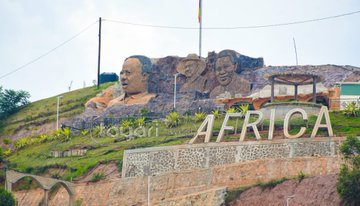
Dr Tugume announced the plan on January 29, describing it as an ambitious expansion of the Africa Coffee Park in Ntungamo District that would integrate coffee value addition, tourism, a coffee stock exchange, a coffee-backed currency, and advanced technologies such as artificial intelligence and blockchain.
“Happy to unveil our planned $5.3B smart Coffee City—that will blend coffee value addition, coffee tourism, coffee currency, coffee stock exchange, artificial intelligence & blockchain technology,” Dr Tugume said. “Africa, join us in creating a million jobs and a new Africa’s economic dispensation.”
According to project promoters, the Smart Coffee City aims to generate up to one million jobs and raise $5.3 billion in revenue from an initial $1 billion investment. The development would include large-scale processing plants, tourism attractions, a coffee academy, hospitals and supporting infrastructure.
Uganda, Africa’s leading coffee exporter, earned about $2.4 billion from coffee exports in the most recent reporting period, with an estimated 12 million livelihoods directly or indirectly dependent on the crop.
Yoweri Museveni has previously championed value addition in the coffee sector and recently toured the Africa Coffee Park in Ntungamo, which officials say is about 85 percent complete. Inspire Africa has said farmers supplying the park are already receiving prices above prevailing market rates.
Supporters of the project argue that coffee tourism could become a major foreign exchange earner. Inspire Africa has suggested that attracting one million coffee tourists annually could significantly boost revenues.
“If we are able to bring even one million coffee tourists coming into our country, each spending $2,000, you can easily get $2 billion,” Dr Tugume said.
However, the proposal has drawn sharp criticism from some commentators and public figures, who question both the financial assumptions behind the project and the motives driving its promotion.
Senior media executive Robert Kabushenga described the Smart Coffee City announcement as a distraction from deeper national challenges, warning that it could be used to divert public attention and resources.
“Guys, it is obvious that this latest twist to the Ntungamo coffee saga is another con act to funnel public funds out of the Treasury for personal gain at the expense of the Ugandan taxpayer,” Kabushenga wrote. “But there is a hidden and cynical ploy—to divert debate away from election failures, violence, ballot stuffing, vote buying, political detentions, corruption, failing public companies and an uncertain future.”
Sceptics have also raised concerns about Inspire Africa’s track record, pointing to past audit reports, including a 2022 audit that flagged wasteful expenditure linked to non-operational or ‘ghost’ coffee outlets.
Others have questioned the realism of projected tourist numbers and the absence of clear, independently verified financing arrangements for the multi-billion-dollar project.
As debate continues online and in policy circles, analysts say the Smart Coffee City proposal underscores both the enormous potential of Uganda’s coffee sector and the growing public demand for transparency, accountability and realistic planning in large-scale national development projects.
Whether the vision materialises as a transformative investment or remains a contested concept is likely to depend on clearer disclosures around funding, governance and measurable benefits to farmers and the wider economy.