Mozambique and TotalEnergies have officially relaunched the $20 billion liquefied natural gas (LNG) project in Cabo Delgado Province, five years after work was halted due to an Islamist insurgency that overran parts of the region.
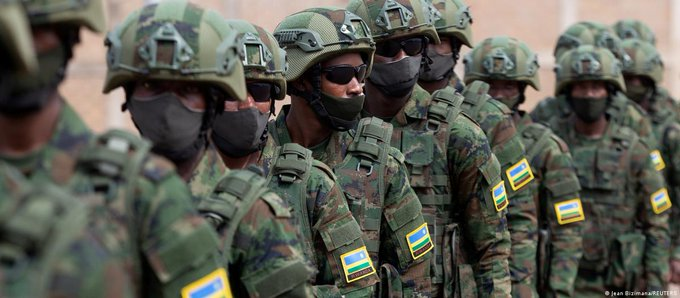
The move comes amid heightened security, provided by the Rwandan intervention that has enabled thousands of workers to return to the site.
TotalEnergies said operations will continue in a “containment mode,” with some workers rotated in and out by air and sea to maintain security in the zones secured by Rwandan forces. Approximately 4,000 workers have resumed work, while the insurgency persists in surrounding areas.
Rwanda initially deployed troops and police to Cabo Delgado following a request from Maputo, and the contingent now numbers between 4,000 and 5,000 personnel.
In August 2025, Mozambican President Filipe Nyusi (often cited in reports as Daniel Chapo in early online coverage) and Rwandan President Paul Kagame signed a Status of Forces Agreement (SOFA) in Kigali.
The agreement establishes the legal framework for Rwanda’s military presence, detailing jurisdiction, administrative arrangements, and operational rights for the troops.
According to regional outlets such as The EastAfrica and the Mozambique Times, the SOFA “could pave the way” for a more permanent Rwandan presence in the country.
Rwandan media, including The New Times, and the Kigali Ministry of Defence have described the Rwanda Security Force (RSF) as “embedded” in the province, using more cautious language to stress the temporary and stabilisation-focused nature of the deployment.
The Mozambique LNG project is widely regarded as the largest single private-sector investment in Africa. Combined with the nearby Rovuma LNG (led by ExxonMobil) and Coral Sul (led by Eni), total investments in Cabo Delgado are expected to exceed $60 billion. If all three projects reach full operational capacity, Mozambique could become one of the top five global LNG exporters by the early 2030s.
The restart of operations in Cabo Delgado is therefore a high-stakes development: it signals a resurgence of investment confidence in a region long disrupted by insurgency, while formalising Rwanda’s security role in maintaining stability for critical energy infrastructure.
Experts say that the success of these projects hinges not only on technical and financial execution but also on sustained security and the capacity of local and foreign forces to contain insurgent activity without escalating tensions.
With global LNG demand rising, Mozambique’s ambition to become a major exporter has put the province—and Rwanda’s military involvement—squarely in the international spotlight.