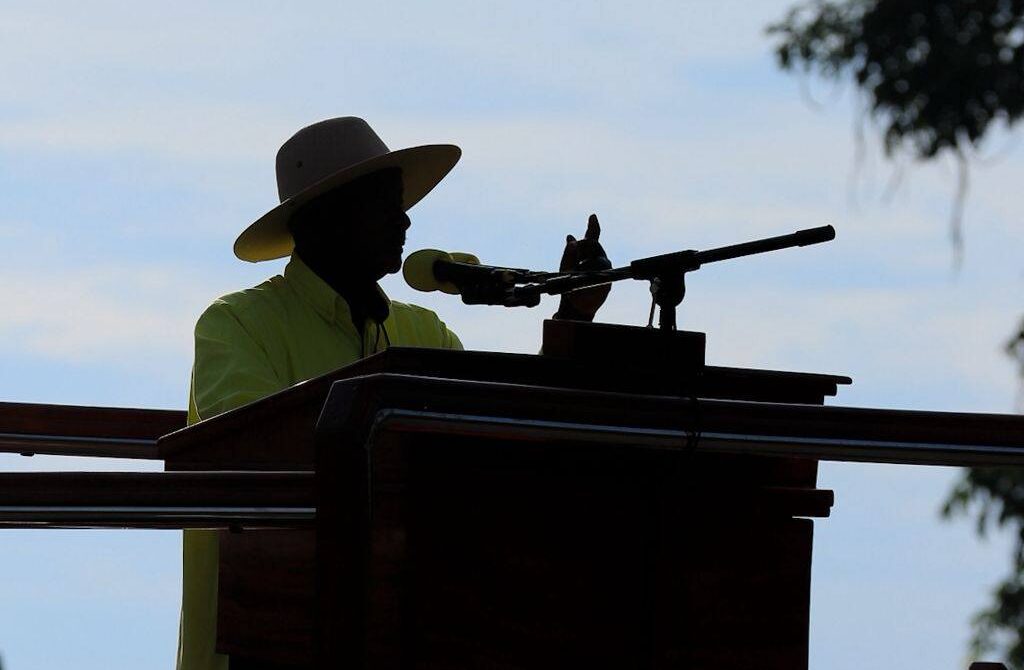
President Yoweri Kaguta Museveni has raised concerns over what he described as serious vote irregularities involving the National Unity Platform (NUP) in Kampala, warning that the incidents signal a troubling shift in electoral conduct.
Speaking during a live radio broadcast from his Kisozi Farm yesterday, President Museveni said the alleged malpractice went beyond previous experiences of electoral fraud and called for stronger safeguards.
“In Kampala, there was ballot stuffing, but this time they went further. Fake ballot papers were printed on Nkrumah Road—about one million—and about 1.7 million votes were brought in from Dubai. Altogether, that is about 2.7 million votes,” he said.
The live broadcast was moderated by Mr Ronald Africa of Sure FM and included journalists from the Greater Mubende sub-region. President Museveni’s comments followed a question seeking clarification on allegations he had previously made at campaign rallies regarding NUP’s role in vote irregularities.
Placing the discussion in a historical context, the President noted that electoral challenges have existed since Uganda’s early post-independence years. “Vote rigging has been there since 1962,” he said, recalling a time when political parties operated separate ballot boxes, which encouraged multiple voting and ballot stuffing. He added that following the disputed 1962 elections, Uganda did not hold another national vote until 1980.
After the NRM assumed power, reforms such as “open lining-up, one ballot paper and one ballot box with candidates’ pictures” were introduced to improve transparency. “These measures can work, but they depend on vigilance,” he said.
Looking ahead, President Museveni said biometric voter verification machines would be strengthened to address emerging challenges. “Even if your finger is eroded, your eyes are not eroded. Biometrics will help stop ballot stuffing,” he explained.
On the conduct of security personnel during elections, the President cautioned against excessive force. “Beating people shows a lack of patience. Torture during elections is not necessary, and I will engage the security forces on this,” he said.
He stressed that maintaining peace remains a national priority. “No one will be allowed to disturb Uganda’s peace. Those who attempt to cause disorder will be dealt with according to the law.”
Responding to claims that security agencies are overstretched, he said, “I have heard statements suggesting there are few soldiers and many rioters. Peace and order are maintained through organisation, not numbers alone.”
“Don’t listen to [Robert] Kyagulanyi; his comments [about our security] lack foresight. His claim that there are not enough soldiers to match rioters is misguided. One soldier carries 120 bullets… do the math. Uganda can not be destabilised, and anyone who attempts it will live to regret.”
On economic policy, the President cautioned against inward-looking thinking. “None of the opposition presidential candidates talk about the regional market. That thinking is dangerous,” he said, emphasising the importance of economic integration. “Our elders taught us ‘Uhuru na Umoja’—freedom and unity. Being a big fish in small ponds weakens us.”