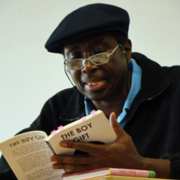
When Meja Mwangi wrote about the dispossessed, the hustling, the broken and the stubbornly hopeful, he was not merely inventing characters. He was holding up a mirror to post-independence Kenya and daring the nation to look. With his death on December 11, 2025, in Malindi, Kenya, at the age of 78, East Africa has lost one of its fiercest literary witnesses and one of its most unflinching storytellers.
Born David Dominic Mwangi on December 27, 1948, in Nanyuki, Mwangi came of age at a time when the promises of independence were already fraying. That historical moment shaped his voice. Unlike writers who lingered in nostalgia or nationalist romance, Mwangi went straight to the streets, the slums, the bars, and the backrooms of power. He wrote about jobless youth, broken dreams, hunger, corruption and moral decay with a rawness that startled readers and critics alike.
His debut novel, Kill Me Quick (1973), announced that a new, uncompromising voice had arrived. The book won the Jomo Kenyatta Prize for Literature in 1974 and introduced themes that would define Mwangi’s career: urban poverty, alienation, and the betrayal of the poor by the postcolonial elite. It was followed quickly by Carcase for Hounds (1974), a work whose very title became shorthand for Mwangi’s bleak honesty. In that novel, power devours the weak, ideals rot quickly, and the city emerges as both predator and prison.
To read Mwangi was to enter a world where hope was fragile but stubborn, where humour survived even in despair. Critics often likened him to Charles Dickens, not for sentimentality but for his searing portrayal of urban life and his empathy for society’s underclass. His Nairobi—especially in Going Down River Road (1976) and The Cockroach Dance (1979)—was alive with hustlers, prostitutes, workers and dreamers, all navigating a system rigged against them.
Mwangi’s work refused to flatter the powerful. He wrote of greed, hypocrisy and moral collapse long before such critiques became fashionable. In doing so, he earned a reputation as a “writer of the streets,” a chronicler of those rarely centred in official narratives. Yet his prose was never crude. It was sharp, disciplined, and often lyrical, carrying both rage and tenderness.
His literary journey was inspired, fittingly, by another Kenyan giant. After reading Ngũgĩ wa Thiong’o’s Weep Not, Child, Mwangi realised that Kenyan lives, spoken in Kenyan rhythms, were worthy of literature. He took that lesson seriously, producing a body of work that spanned adult fiction, children’s literature, short stories, and later, screenwriting.
Beyond the page, Mwangi also made his mark in film. He worked as an assistant director and casting director on major international productions, including Out of Africa (1985), White Mischief (1987), and The Kitchen Toto (1988). This crossover into cinema reflected his belief in storytelling as a broad, democratic art—one not confined to bookshelves but alive in images, voices and movement.
His career earned him global recognition. He was a Fellow in Writing at the University of Iowa (1975–76) and received numerous awards, including the Lotus Prize for Literature and multiple Jomo Kenyatta Prizes across adult and youth categories. His books were translated into French, German, Portuguese and other languages, ensuring that Kenyan stories travelled far beyond the country’s borders.
Yet for all the international acclaim, Mwangi remained grounded in the everyday. His stories were animated by humour, irony and resilience—the small human gestures that persist even in crushing conditions. He understood that laughter and survival often sit side by side. This balance made him accessible to ordinary readers while retaining deep literary seriousness.
In his later years, Mwangi spent time in the United States before returning to Kenya. His passing in Malindi feels symbolically fitting: a writer who traversed worlds, finally resting by the coast, far from the crowded streets he immortalised but close to the soil that shaped him.
Meja Mwangi’s legacy is not only in the long list of his published works, impressive as it is. It lies in how he changed what Kenyan literature could speak about—and how boldly. He legitimised stories of the poor, the unemployed, the morally conflicted, and the forgotten. He insisted that literature must confront power, not flatter it, and that the lives of ordinary people are not footnotes but the main text of history.
For generations of writers, Mwangi was proof that you could be unapologetically local and still profoundly universal. For readers, he was a companion through uncomfortable truths. For Kenya, he was a conscience—sometimes harsh, often funny, always honest.
In Carcase for Hounds, Mwangi showed how ideals are easily consumed when power runs unchecked. In life, he showed that words can resist that consumption, that stories can outlive the systems they critique. As Kenya and the wider literary world mourn him, one truth stands firm: Meja Mwangi did not just write about society—he shaped how it understands itself.
He rests now, but his characters still walk River Road, his sentences still sting, and his voice—clear, defiant, and humane—remains impossible to silence.