Kampala — At dawn in Bukoto, shopkeeper Sarah Nakato wipes a thin brown film off her shelves before opening for the day. By midday, it will be back.
“You clean in the morning, and by evening everything is dusty again,” she says, coughing slightly. “This dust is killing us slowly.”
For many residents, this is life in Kampala — a city trapped between two seasonal extremes.
When the rains stop, dust chokes the air. When they return, floods swallow homes, shops, and roads. Locals have coined a bitter nickname for their city: ‘Kampala, the city of dust and floods’.
Breathing Has Become a Daily Struggle

During dry months, especially in mid-2025, Kampala’s air turned visibly hazy. Unpaved roads, endless construction sites, heavy traffic, and open waste burning combined to push pollution levels to alarming highs. At several points, the city ranked among the world’s worst for air quality.
In areas like Salaama Road in Makindye, Kinaawa in Kyengera, and parts of Namungoona, residents say breathing problems have become normal.
“My children are always sick,” says James Mugisha, a boda boda rider. “The doctor says it’s the dust. But where do we go?”
Health experts from Makerere University and AirQo warn that fine particulate matter (PM2.5) in Kampala often exceeds World Health Organisation limits by up to six times. The Uganda Lung Institute reports rising cases of asthma, bronchitis, and other pollution-related illnesses.
Kampala Capital City Authority (KCCA) manages Kampala’s ~2,100 km road network, but only about 770 km are paved, with many existing paved roads old and in poor shape, leading to major upgrades via projects like the Kampala City Roads Rehabilitation Project (KCRRP), funded by the AfDB and Government, aiming to modernize infrastructure with new construction and reconstruction of key routes like Ben Kiwanuka Street and Kira Road.

Many existing paved roads are over 35 years old, exceeding their 15-20 year lifespan, with only a fraction in good condition. KCCA needs much more than the Shs25b received annually for effective maintenance.
But for residents like Nakato, progress feels distant. “We hear plans,” she says. “But we still breathe dust.”
When Rain Falls, Lives Are Turned Upside Down
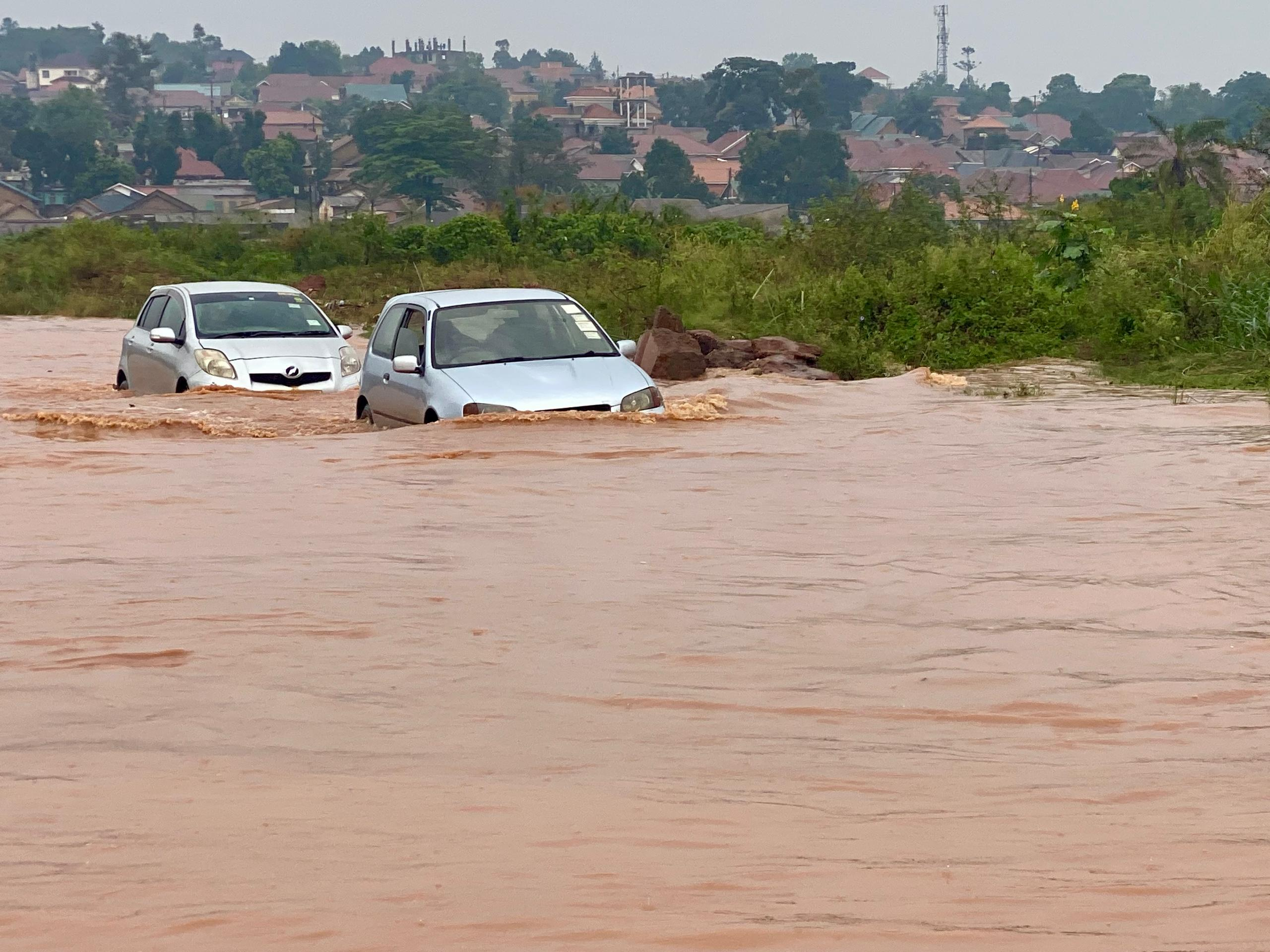
If dust defines the dry season, floods define the rains. When the clouds burst — especially between March and May or September and December — streets quickly turn into rivers.
In March 2025, floods killed several people, including children. Later in October and November, downtown Kampala was submerged again. Traders watched helplessly as water poured into arcades, destroying goods worth billions of shillings.
“I lost everything in one night,” says a trader in Kikuubo, who asked not to be named. “Shoes, clothes, money — gone. When it rains now, I don’t sleep.”
Flood-prone areas like Bwaise, Kisenyi, and low-lying parts of the city have become symbols of repeated failure. Residents blame poor drainage, wetlands being built on, garbage-clogged channels, and major projects such as the Nakivubo Channel redevelopment, which critics say disrupted natural water flow.
Opposition leaders, including Joel Ssenyonyi and Kampala Lord Mayor Erias Lukwago, accuse authorities of protecting powerful interests while ordinary people suffer. “This is failed governance,” Lukwago has said, repeatedly warning about wetland destruction.

KCCA says it is acting. Seven of 18 key downtown drainage crossings have been completed, 451 traders have been earmarked for compensation, and partnerships with private developers are underway to cover open channels. The authority insists the measures will deliver a lasting solution.
Caught in the Middle
Environmental groups argue that responsibility is shared. They point to residents who dump waste into drains and continue building in wetlands despite warnings. “The city cannot survive if everyone breaks the rules,” one activist said.
Yet for many Kampala residents, the feeling is the same: they are paying the price for a city growing faster than its systems can handle.
A City Still Hoping
Kampala’s struggle with dust and floods is ultimately a human story — of parents worrying about their children’s lungs, traders fearing the next downpour, and communities demanding dignity.
Progress is visible in places, but skepticism runs deep. “We love this city,” says Mugisha, looking at the dusty road he rides every day. “We just want a Kampala where rain is not a disaster, and air is not poison.”
Until then, residents continue to live between the dust — and the floods.