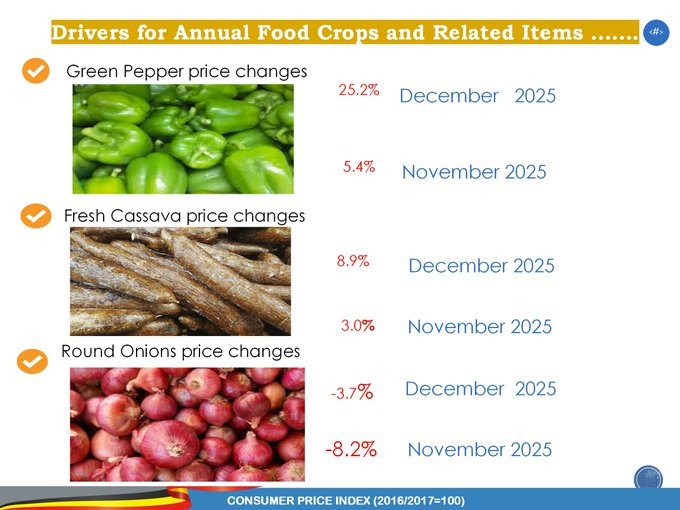
Prices of many everyday items went up in December 2025, especially food and fuel, even though Uganda’s overall inflation rate remained at 3.1 percent, according to the Uganda Bureau of Statistics (UBOS).
Inflation is simply the increase in prices of things people buy daily, such as food, fuel, transport and household services.
Food prices hit hardest
UBOS says food prices increased the most, putting pressure on household budgets.
Prices went up for common foods, including cabbage, which rose sharply, Irish potatoes, passion fruits and pawpaws, fresh cassava, green pepper and onions. Because of these increases, many families spent more money on food in December than they did in November.
Fuel and energy costs also increased
The cost of fuel and household energy also went up: firewood and charcoal became more expensive, petrol prices increased, affecting transport fares, and water charges also rose slightly. These price increases affected cooking, transport and other daily needs.
Transport and services
Transport prices, especially air travel, went up after falling in November. Food and beverage services, such as restaurants, also recorded higher prices. However, some services increased slowly, helping to keep overall inflation stable.

Some goods also became more expensive
Prices of some common goods increased, including dried and smoked fish, live chicken, mukene and new women’s clothes.
Prices rose within the month
From November to December, overall prices rose by 0.5 percent. This was mainly due to food, fuel and transport costs
Prices differ across regions
UBOS noted that price increases were not the same everywhere: Kampala recorded the highest price increases, Masaka also saw higher food and service costs, and Mbale recorded the lowest increase in prices.
What this means for ordinary Ugandans
In simple terms, life became more expensive in December, especially when buying food and fuel. Even though inflation did not rise overall, many households felt the pressure at the market, fuel stations and transport stages.
Presenting the report, Ms Aliziki K. Lubega, Director of Economic Statistics at UBOS, said prices remain stable overall, but warned that rising food and fuel prices need close attention because they directly affect the cost of living.
The report was released on December 31, 2025, at Statistics House in Kampala.