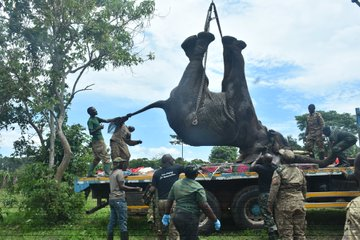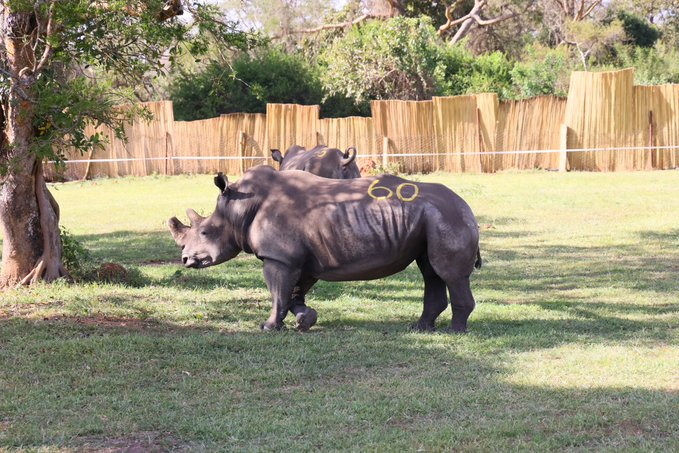
Uganda’s ambitious rhino restoration programme reached a new milestone on Tuesday as the first of eight rhinos imported from South Africa officially touched the ground at Ziwa Rhino Sanctuary in Nakasongola.
The Uganda Wildlife Authority (UWA) confirmed the arrival in a brief update, sparking excitement among conservationists and wildlife enthusiasts. “The first rhino has touched the ground at Ziwa. Keep following for more updates,” UWA announced as the animals began their offloading and settling-in process.
The rhinos, donated by African Parks from Munyawana Conservancy in KwaZulu-Natal, landed at Entebbe International Airport earlier in the morning before being transported under heavy security and close veterinary supervision to Ziwa.
This marks the beginning of their quarantine and acclimatization period, during which UWA experts will monitor their health and adaptation to local conditions.
UWA spokesperson Bashir Hangi, who accompanied the convoy, described the moment as historic: “From the Rainbow Nation to the Pearl of Africa—eight rhinos are on their way to rebuild our populations. Seeing the first one step onto the sanctuary is a proud moment for conservation in Uganda.”
Officials say the balanced mix of four males and four females is designed to strengthen breeding and ensure long-term population growth. With this addition, Uganda’s total rhino population rises to 59.
Dr. Basil Ajer, Director of Tourism and Wildlife, said the arrival signals renewed momentum for wildlife recovery. “Watching the first rhino arrive at Ziwa is a reminder of how far Uganda has come. This is not just a transfer—it is an investment in the future of our wildlife and tourism,” he said.
More arrivals are expected throughout the day as UWA teams coordinate offloading and secure placement of the remaining rhinos.
The animals will later be part of Uganda’s broader Rhino Restoration Programme, which includes future translocations to Kidepo Valley National Park and Ajai Wildlife Reserve.
For now, all eyes remain on Ziwa, where the first rhino has officially begun its new life—symbolizing hope, recovery, and renewed commitment to conservation.