Beijing — China has announced it will eliminate tariffs on almost all products imported from 53 African countries, a major trade policy shift aimed at boosting African exports and deepening economic cooperation between Beijing and the continent.
The zero-tariff policy will take effect on May 1, 2026, and will apply to all African countries that maintain diplomatic relations with the People’s Republic of China (PRC).
The only African country excluded from the arrangement is Eswatini, the continent’s sole nation that continues to recognise Taiwan diplomatically instead of Beijing.
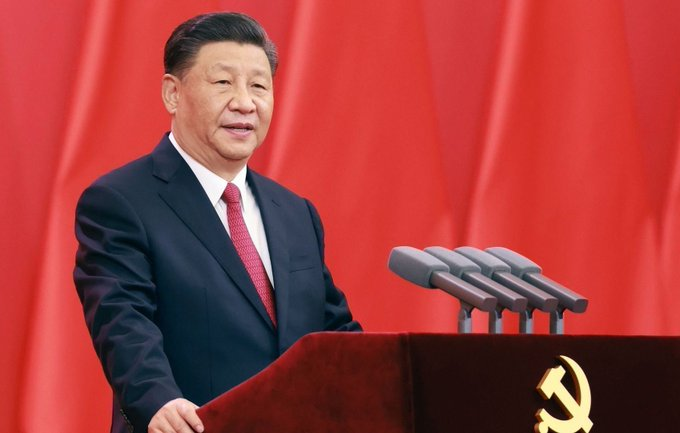
The announcement was made by Chinese President Xi Jinping in a message delivered to the African Union Summit in Addis Ababa, and has since been widely reported by international media.
Expanding Existing Zero-Tariff Access
China’s latest move expands an earlier trade arrangement under which 33 African countries, mainly classified as least developed, had already been enjoying preferential tariff-free access into the Chinese market.
By extending the policy to nearly all African diplomatic partners, analysts say Beijing is positioning itself as a stronger economic ally to Africa at a time of shifting global trade dynamics.
China is currently Africa’s largest trading partner, with trade dominated by African exports of minerals, oil, and agricultural products, while China supplies the continent with manufactured goods and infrastructure development.
Potential Boost for African Exports
Officials and observers say the tariff removal could significantly increase Africa’s competitiveness in the Chinese market, particularly for commodities and agricultural exports such as coffee, tea, cocoa, cotton, fish, oil, and minerals, as well as select manufactured goods.
However, critics warn that without industrialisation and value-addition, Africa risks continuing its traditional role as a supplier of raw materials.
Eligible Countries
The 53 African countries eligible for China’s new zero-tariff policy are:
Algeria, Angola, Benin, Botswana, Burkina Faso, Burundi, Cabo Verde, Cameroon, Central African Republic, Chad, Comoros, Congo (Republic), Congo (DRC), Côte d’Ivoire, Djibouti, Egypt, Equatorial Guinea, Eritrea, Ethiopia, Gabon, Gambia, Ghana, Guinea, Guinea-Bissau, Kenya, Lesotho, Liberia, Libya, Madagascar, Malawi, Mali, Mauritania, Mauritius, Morocco, Mozambique, Namibia, Niger, Nigeria, Rwanda, São Tomé and Príncipe, Senegal, Seychelles, Sierra Leone, Somalia, South Africa, South Sudan, Sudan, Tanzania, Togo, Tunisia, Uganda, Zambia and Zimbabwe.
Strategic and Geopolitical Implications
The move is expected to further strengthen China’s influence across Africa and the wider Global South, reinforcing Beijing’s long-term engagement through frameworks such as the Belt and Road Initiative and the Forum on China-Africa Cooperation (FOCAC).
China’s tariff-free market access may also invite comparisons with the United States’ African Growth and Opportunity Act (AGOA), which offers eligible African states duty-free access to U.S. markets but is often tied to governance and political conditions.
With the May 2026 implementation date now set, African governments and exporters are expected to begin preparing for expanded trade opportunities in the world’s second-largest economy.