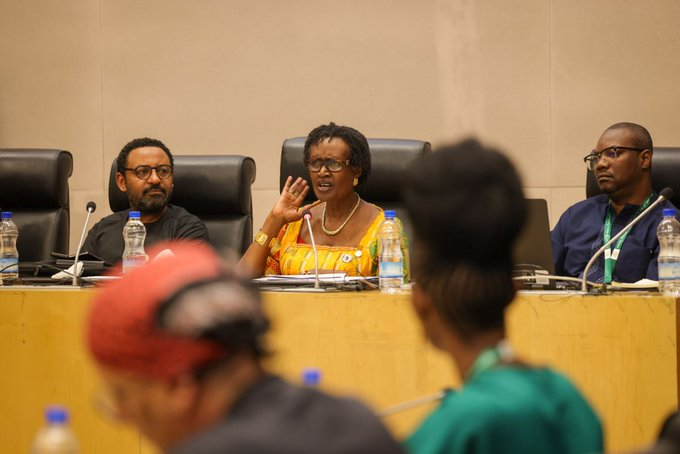
Inequality remains a major barrier to Africa’s development goals, particularly the Agenda 2063 vision of inclusive growth, health and education, according to remarks by Winnie Byanyima, Executive Director of UNAIDS and veteran advocate for economic justice.
In a series of posts on X (formerly Twitter) late Wednesday, Byanyima said the world’s economic system is “wired” in a way that makes it difficult for African countries to mobilise the resources they need for development. She argued that until the global economy is re-shaped, Africa will struggle to achieve targets in health, education, social protection and infrastructure under Agenda 2063, the African Union’s long-term development blueprint.
“Inequality is a major driver for why we cannot finance our development needs. Inequality is wired in the global rules of the economy. Until we unrig a rigged global economy, we will not reach the health, education targets in Africa’s ambitious #Agenda2063,” she wrote.
Byanyima stressed that working in isolated silos won’t be enough, urging collective action and structural reforms to unlock investments essential for Africa’s transformation. “We can’t achieve that beautiful vision of #Agenda2063 … if we continue to work in silos and [do] not tackle the structural issues that prevent us from investing adequately in education, health, social protection and infrastructure,” she added.
Her comments highlight longstanding concerns about the global economic architecture and its impact on development financing in Africa. Experts have pointed out that unequal terms of international finance, high debt servicing costs and limited access to concessional funding constrain public investment in critical sectors such as education and health — key priorities under Agenda 2063 and the UN Sustainable Development Goals.
Byanyima’s advocacy comes amid broader debates on how to recalibrate international systems to better support low- and middle-income countries. A recent G20 report chaired by Nobel Laureate Joseph Stiglitz described global inequality as a “crisis,” noting that the richest 1% captured a disproportionate share of wealth gains over the last two decades, and called for improved global economic coordination.
Agenda 2063 itself identifies reducing inequality, expanding education and health services, and strengthening Africa’s voice in global economic governance among its core goals.
Byanyima has previously urged global leaders to consider mechanisms similar to the Intergovernmental Panel on Climate Change (IPCC) to highlight how inequality affects economic outcomes and public health — including pandemic response — a position rooted in her work with the Global Council on Inequality, AIDS and Pandemics convened by UNAIDS.
Her recent statements have reignited the discussion over how global economic rules — from tax systems to financial governance — can be reformed to create a more equitable environment for African development. Policymakers and development experts say addressing structural inequality is critical if countries are to meet their long-term ambitions for prosperity and social well-being.