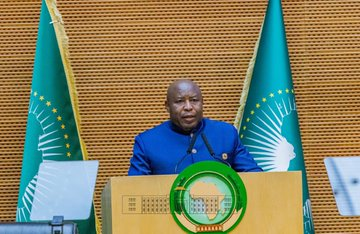
Addis Ababa, Ethiopia — African leaders have chosen Burundi’s president to lead the African Union (AU) for 2026, but not without a few light-hearted moments and diplomatic conversations at the high-level summit.
At the 39th Ordinary Session of the AU Assembly of Heads of State and Government in Addis Ababa on February 14, H.E. Évariste Ndayishimiye, President of Burundi, was formally elected Chairperson of the African Union for the year 2026, taking over from Angola’s João Lourenço under the AU’s rotating leadership system.
The summit, held under the theme “Assuring Sustainable Water Availability and Safe Sanitation Systems to Achieve the Goals of Agenda 2063,” focused on core continental issues including water security, sustainable development, peace and integration. Leaders discussed how to meet Africa’s long-term goals for Agenda 2063 and respond to ongoing crises in regions such as Sudan and the Sahel.
In his acceptance remarks, President Ndayishimiye thanked fellow leaders for their trust and vowed to serve with humility and dedication, committing to promoting continental unity and advancing Africa’s shared priorities.
The session also agreed on other AU Bureau positions, with Ghana’s president selected as First Vice Chair, Tanzania as Second Vice Chair, and Angola named Rapporteur.
Diplomatic Sideline: South Africa’s Gaffe Sparks Memes
Amid serious diplomatic engagements, a brief misnaming incident involving South Africa’s official account drew online attention and light-hearted jabs. The account mistakenly referred to DRC President Félix Tshisekedi using the name “Philip,” which quickly circulated on social media, prompting memes and gentle criticism about regional diplomatic attention to detail. While the post was corrected, the moment underscored how even small errors at major summits can quickly become talking points online.
High-Profile Meetings and Regional Cooperation
South African President Cyril Ramaphosa held a series of key meetings on the sidelines, including talks with Ethiopian officials aimed at strengthening trade and tourism ties anchored in historical relationships forged during anti-apartheid support. He also met with South Sudan’s Salva Kiir to discuss ongoing peace efforts and continental stability.
Continental Priorities and Challenges
AU leaders reiterated commitments to pressing challenges facing the continent, including water and sanitation access, structural reforms, economic integration and peacebuilding. They emphasised that delivering tangible benefits from Agenda 2063 priorities — such as infrastructure development, conflict resolution and resilience against shocks — remains essential for Africa’s future.
The summit wrapped up with a renewed call for unity among member states and stronger partnerships with global organisations to help Africa confront both development and security hurdles.