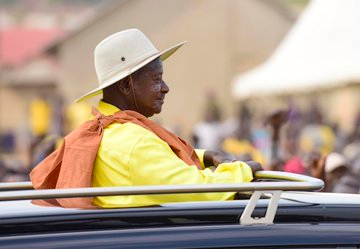
President Yoweri Museveni has said the introduction of biometric voter verification (BVV) machines played a decisive role in weakening Uganda’s opposition, arguing that the technology eliminated election malpractices that had previously worked in their favour.
In a statement shared on his official platforms, Museveni said the BVV system closed loopholes that enabled cheating at polling stations, describing the machines as the turning point in the recently concluded elections.
“The death-knell to the opposition were the BVV machines. With the BVV machines, the Opposition’s life-line of cheating was gone,” Museveni said.
The President argued that the use of biometric verification improved transparency by ensuring that only properly identified voters were allowed to cast ballots, insisting the ruling National Resistance Movement (NRM) won through a more credible process.
However, opposition politicians and several civil society groups have continued to dispute the credibility of the elections, citing alleged irregularities, arrests of political actors, and a restrictive political environment. Some critics maintain that technology alone cannot guarantee free and fair elections without equal political space and stronger institutional accountability.
Electoral authorities have previously defended the BVV system, saying it was introduced to curb voter fraud, impersonation and ballot stuffing—issues that have repeatedly featured in past elections.
Political analysts say Museveni’s remarks reflect ongoing divisions over the integrity of Uganda’s electoral process. While government supporters point to technology-based reforms as a sign of progress, opposition figures argue that broader political and structural challenges still influence election outcomes.
Debate over the effectiveness of BVV machines is expected to continue as parties and observers evaluate their impact on future polls and Uganda’s wider democratic process.