
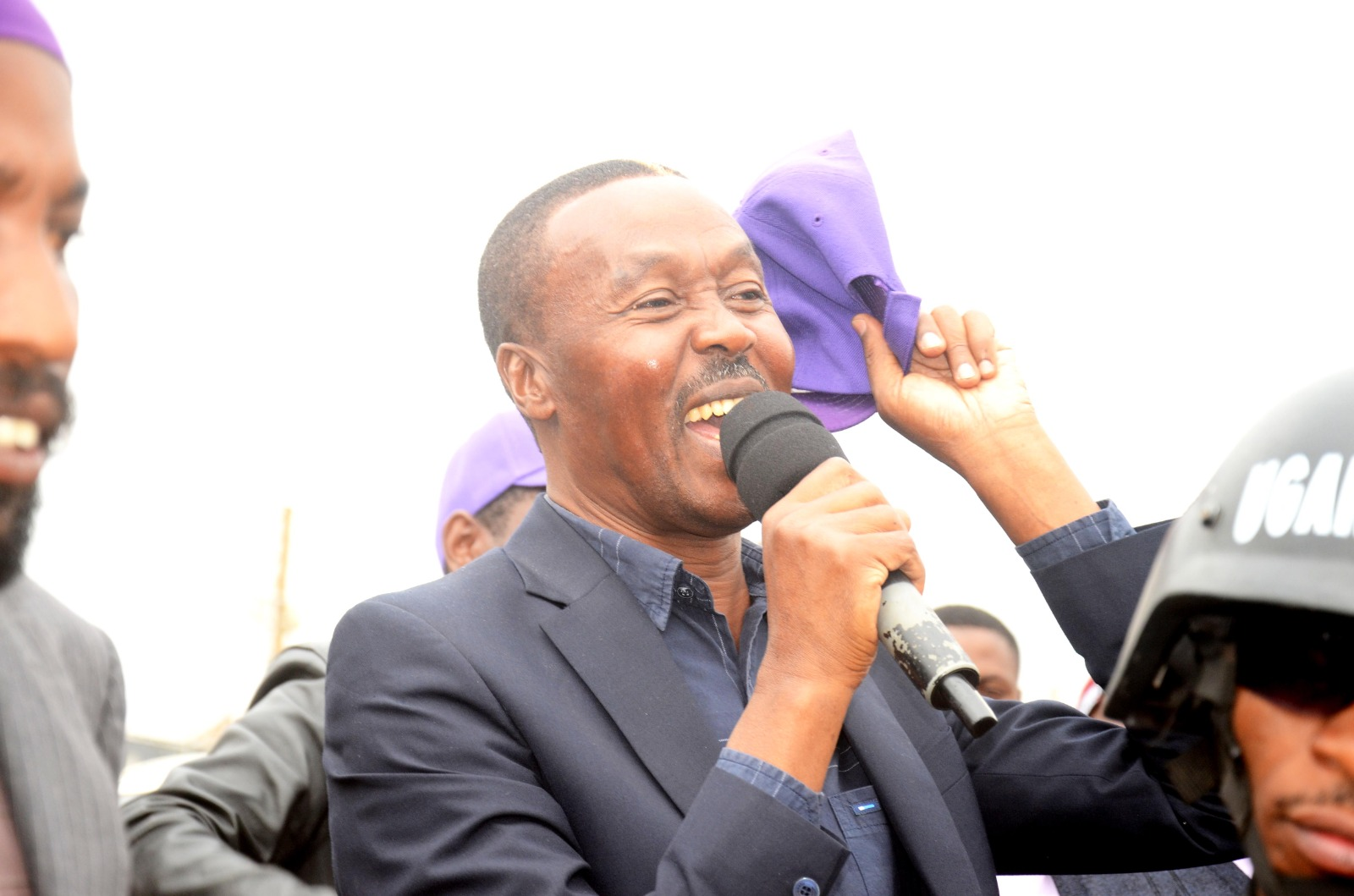
Busia — Alliance for National Transformation (ANT) presidential candidate Maj Gen (rtd) Gregory Mugisha Muntu has accused President Yoweri Museveni of weakening Uganda’s leadership by using money to compromise political actors, warning that the practice poses a serious threat to the country’s future as it approaches the 2026 general elections.
While campaigning in Busia District, Muntu told supporters that Uganda’s most dangerous challenge is not poor service delivery but what he described as the systematic erosion of leadership integrity.
“Gen Museveni has broken the will of leaders. He is using money as a tool of compromise; buying out leaders,” Muntu said.
He argued that many of Uganda’s day-to-day problems—such as drug shortages in hospitals, the presence of covert security operations, and deteriorating infrastructure—are relatively easy to fix with committed leadership.
“There are many problems in our country that are actually easy to fix,” Muntu said. “What truly frightens me is something deeper: the growing culture of using money as a tool to compromise leaders. This is extremely dangerous.”
Muntu warned that Uganda’s vast natural wealth makes the country particularly vulnerable if leadership remains compromised. He pointed to minerals, oil, gold, and uranium as resources that attract intense global interest.
“Anyone intelligent enough knows that the whole world is looking for these resources,” he said. “If they find leaders who are easily compromised, they will take these resources at very cheap prices.”
According to the former army commander, the use of money to buy political loyalty—sometimes even within ruling parties—creates long-term instability that will outlive any single administration.
“The question is: what happens when such leaders eventually leave power?” he asked. “With leaders who are easily compromised and resources of such high value, you can understand just how vulnerable our country becomes.”
Muntu also criticised what he described as shallow political strategising that ignores the broader implications of compromised leadership, saying Uganda cannot build a strong Pan-African identity under such conditions.
“A country cannot build a strong Pan-African foundation when its leadership is broken—when leaders are compromised by money and that behaviour is entrenched as a culture,” he said.
Calling for a new political ethic, the ANT leader urged Ugandans to demand integrity from those seeking office. “We need men and women of integrity—leaders who cannot be compromised,” Muntu said. “If we fail to achieve this, we risk losing our country to those who are only interested in exploiting the resources we have.”
On the question of political change, Muntu reiterated his commitment to peaceful, democratic processes, while acknowledging Uganda’s complex political history.
“In an environment where there is no genuine democratic process, you must build two strategies simultaneously: a strategy for winning power, and a strategy for taking power,” he said, noting that proof of an electoral victory can become a critical tool in asserting political authority.
However, Muntu distanced himself from armed struggle, despite acknowledging that the current government itself came to power through force.
“I have chosen to do everything humanly possible to pursue change through a peaceful, electoral process,” he said. “I cannot lead people back into armed conflict—not because it is impossible, but because power obtained through violence often makes leaders drunk with power.”
As campaigns for the 2026 elections gather momentum, Muntu’s remarks underscore growing debate over governance, leadership ethics, and Uganda’s long-term political stability—issues likely to dominate the national conversation in the months ahead.