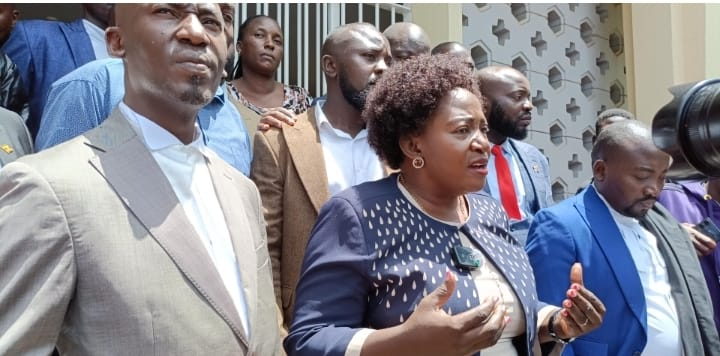
National Unity Platform (NUP) candidate Rose Nalubowa has withdrawn several High Court applications challenging the outcome of the Masaka City Woman Member of Parliament race, a move analysts say signals a strategic shift in one of the most closely watched legal disputes from Uganda’s 2026 elections.
The withdrawal comes shortly after Justice Simon Peter Kinobe declined to recuse himself from the matter, despite Nalubowa’s request raising concerns over the judge’s impartiality. Justice Kinobe dismissed the application and confirmed he would continue handling the case.
Nalubowa had sought judicial review of a disputed vote recount that overturned the Electoral Commission’s earlier declaration in her favour and handed victory to National Resistance Movement (NRM) candidate Justine Nameere. Her legal team argued that the recount was riddled with irregularities, including questionable ballot handling and procedural inconsistencies.
Following the court’s refusal to grant the recusal request, Nalubowa withdrew the applications, saying she would instead file a full election petition—an approach that provides broader legal scope to examine electoral procedures, evidence, and alleged malpractice in detail.
Legal observers say the decision may be calculated, allowing Nalubowa’s lawyers to avoid preliminary rulings that could restrict future arguments while refocusing the case on substantive electoral issues.
The Masaka City Woman MP contest has remained one of the most contentious races of the 2026 polls. Nalubowa was initially declared the winner before Nameere successfully pushed for a recount, which later placed the NRM candidate ahead by more than 2,300 votes.
While Nameere’s camp has interpreted Nalubowa’s withdrawal as validation of the recount results, Nalubowa insists the matter is far from settled, maintaining that her next legal action will target what she describes as serious flaws in the recount process.
As the dispute heads toward a substantive election petition, analysts say the case could become a key test of Uganda’s election dispute resolution system, judicial independence, and the legal standards governing vote recounts.