

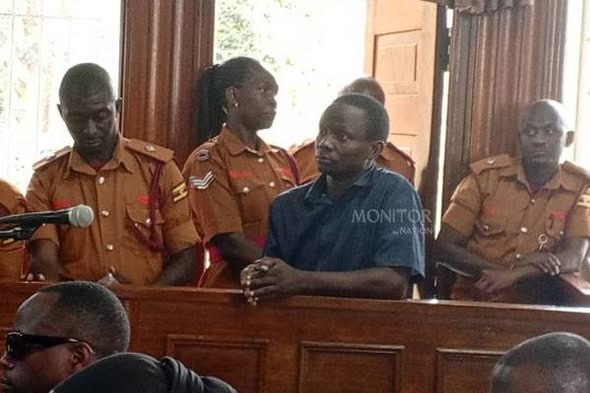
Fr Deusdedit Ssekabira, who has been missing for weeks following his abduction by UPDF soldiers from Masaka District earlier this month, has been charged with money laundering.
He is accused of concealing Shs500 million.
He finally appeared before the Masaka Magistrate’s Court, but the presiding magistrate, Abdallah Kayiza, remanded him until January 21, 2026, stating that the court lacks jurisdiction to hear the case.
According to state prosecutors, Fr Ssekabira is suspected of knowing that the Shs500 million he allegedly concealed was proceeds of crime. The matter has raised public concern due to the mysterious circumstances surrounding his disappearance.
Nearly two weeks after his abduction, the Uganda People’s Defence Forces (UPDF), through spokesperson Chris Magezi, confirmed that Fr Ssekabira was in their custody on charges of “violent subversive activities.” However, the military has not provided further details about these allegations.
The case has attracted attention, given Fr Ssekabira’s profile as a Catholic priest and his previous work in the Masaka Archdiocese.
Legal analysts note that the involvement of the UPDF and the delay in formal court proceedings raise questions about due process and the legal framework governing military detentions of civilians.
Human rights lawyer Nicholas Opiyo drew parallels between his own past legal battles and the current situation facing the Reverend Father, characterising both as attempts by “autocrats” to delegitimise and inconvenience those perceived as credible threats to power centres.
“Autocrats do not like seeing credible folks pulling around power centres. When they do, they must do all they can to discredit it, delegitimise it, and inconvenience you at every turn,” said Opio.
Fr Ssekabira’s lawyer has indicated plans to challenge the remand order and seek clarification on the charges and the jurisdictional issues cited by the magistrate.
The remand period provides the state with time to prepare to transfer the matter to a court with appropriate jurisdiction.
Dombo-Spire online spat
Meanwhile, public debate continues over the intersection of national security, military authority, and civilian legal rights in Uganda. The case has stirred heated discussions online, with social media users debating both his fate and the treatment of suspects under Ugandan law.
Emmanuel Lumala Dombo, a prominent commentator, weighed in on the issue in a series of tweets, drawing parallels between the priest’s situation and historical abuses of religious authority.
“In Rwanda, some priests openly participated in the genocide. I used to think that all priests were infallible. In Uganda, we don’t know what Fr. Deusdedit did. As faithfuls, we can only continue praying for him and those holding him,” Dombo wrote.
The discussion prompted further debate about legal rights and the presumption of innocence. Jim Spire Ssentongo, academic, columnist, editorial cartoonist, author, and anti-corruption activist, questioned the legality of holding a suspect without charge or access to legal representation.
“According to the law, how do we handle a suspect? Is he guilty until proven innocent? Would he be held for more than two weeks, without even accessing a lawyer, relatives, or being charged? Is your heart at peace while defending such treatment?” he tweeted.
Dombo responded with a Biblical reflection, highlighting the historical context of injustice. “From Biblical times, I have come to realise that reality is at times different from expectations. Seeing how Jesus was democratically condemned, I at times shudder,” he wrote.
The abduction of Fr. Ssekabira has cast a shadow over Christmas celebrations for some, with observers noting that the case is likely to dominate holiday homilies and discussions within the Catholic community. Ssentongo cautioned that public debates often overlook the personal pain caused by such events, adding, “You may not say the same (okubalaata) if it’s you or your own child abducted.”