

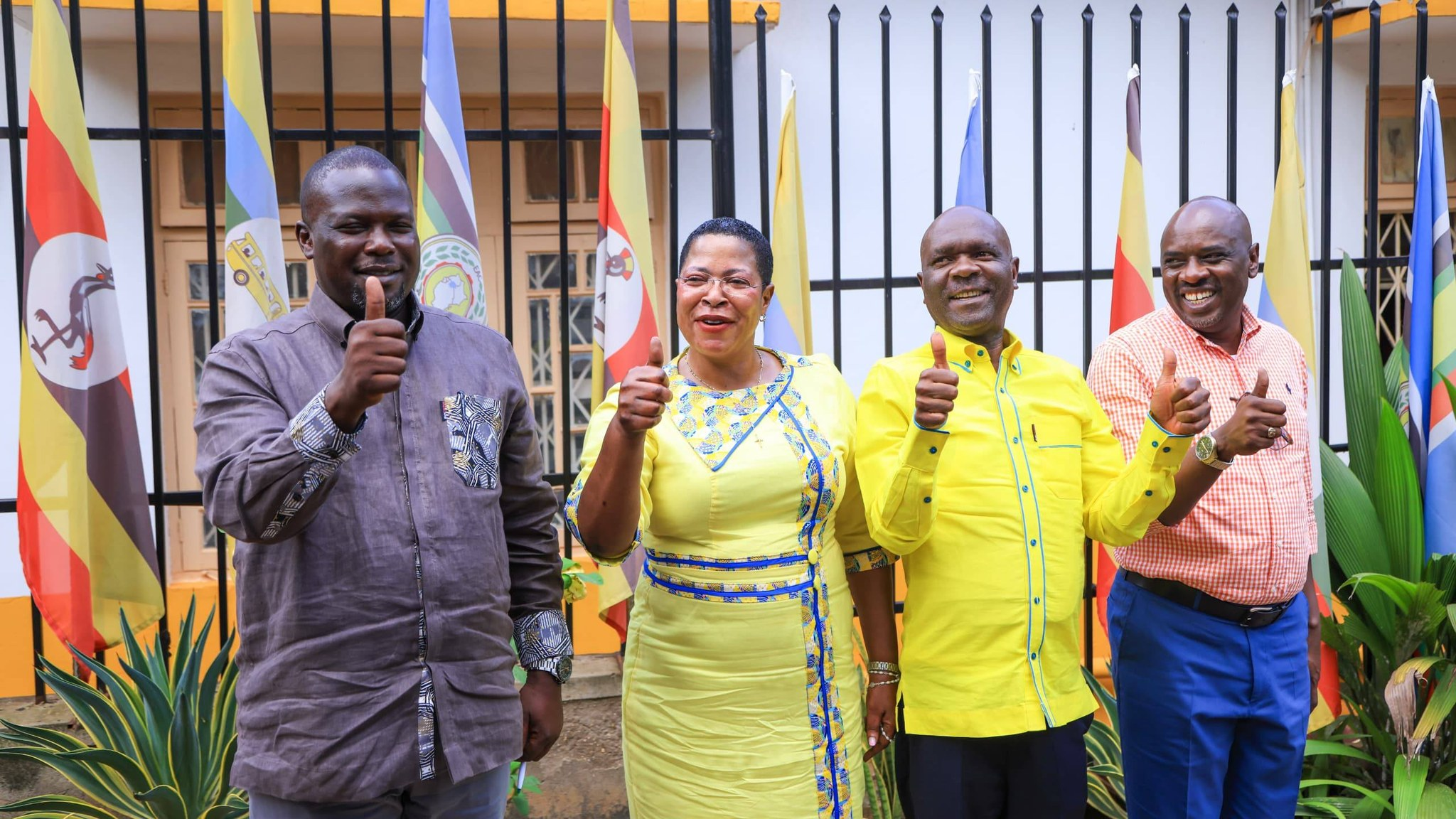
Kampala, Uganda — The Forum for Democratic Change (FDC) Vice Chairperson for the Central Region and former Mawokota South Member of Parliament, Yusuf Nsibambi, has officially defected to the ruling National Resistance Movement (NRM), citing what he described as lack of clear direction, coordination and unity within the opposition.
Speaking on Wednesday at the NRM Secretariat in Kampala, Nsibambi said his decision was reached after long reflection on the state of opposition politics, which he described as increasingly disorganised and ineffective.
“There is no proper direction. We have never sat as opposition parties to harmonise positions on key national issues. Decisions are taken without consultation, and that confusion has affected our credibility before the electorate,” Nsibambi said.
Nsibambi has been a long-serving opposition figure, previously serving as Chairperson of the FDC Electoral Commission, later becoming the party’s Deputy President for the Central Region. He also served in Parliament as Shadow Minister for Works and Transport and later rose to become Opposition Chief Whip.
He noted that internal disagreements within FDC had over time contributed to fragmentation, leading to splinter formations associated with political figures such as Betty Kamya, Mugisha Muntu, and Erias Lukwago.
Reflecting on the recently concluded elections in Mawokota South, Nsibambi admitted that his defeat influenced his decision to reassess his political direction.
“No one believed I could lose Mawokota South, but I sincerely lost. The electorate told us they were tired of the kind of politics we were advancing,” he said.
He also criticised what he termed confrontational opposition tactics, including walkouts from Parliament and mobilising youth for protests without a coordinated strategy.
“You cannot build a political programme on confusion. Instead of presenting development programmes and clear budgets to the people, the focus shifted to defiance without coordination,” he said.
Nsibambi said he had since engaged NRM leaders and concluded that working with government would provide a more constructive political path.
“We have a duty and responsibility to work harmoniously in a peaceful manner. We need tranquility for development. Chaos will not help our country,” he said, pledging to return his FDC membership card and serve the ruling party in any capacity assigned.
NRM Welcomes Nsibambi
Welcoming him to the party, NRM National Vice Chairperson (Female) and Speaker of Parliament, Rt. Hon. Anita Annet Among, said the ruling party continues to attract opposition and independent legislators.
“Outside of the independents, we have MPs from the opposition who have approached us and are ready to work with the NRM. Even members from other parties are willing to work with us,” Among said.
“Our home is big enough to accommodate everybody. All those who want to join the NRM should know that the party is open,” she added.
Among said Nsibambi’s decision reflected confidence in the NRM’s record, noting that he had acknowledged appreciating government programmes after serving in Parliament.
She also confirmed that several independent MPs had joined the ruling party, including Muhammed Ssentayi, Gyavira Ssemwanga, Charles Ngabirano, Jovia Kaliisa, and Bernard Mutebi Mugoya, among others.
Todwong: Defection Reflects NRM’s Mission
NRM Secretary General Rt. Hon. Richard Todwong described Nsibambi’s defection as consistent with the party’s historical mission of reconciliation and recruitment.
“For many years he has been in the FDC and was looking for ways to join the NRM. This speaks to the historical mission of the party,” Todwong said.
“That is how the NRM survives and strengthens itself — by recruiting. It is part of our DNA. Forces we once disagreed with come, we reconcile, and we work together,” he added.
Todwong said the NRM focuses on national priorities such as roads, education, health, security and wealth creation.
FDC Downplays Defection
The FDC leadership, through Party President Patrick Amuriat, downplayed the defection, calling it “disappointing but not surprising.” Amuriat noted that Nsibambi’s engagement with State House without party clearance had already been under review through internal disciplinary processes, which are now moot following his exit.
“FDC is not built on individuals but rather on ideology, structures, and the commitment of members across the country,” Amuriat said. The party also confirmed consultations are underway to appoint a new Chief Whip.
The defection marks another significant shift in Uganda’s opposition landscape as the NRM continues to attract veteran political figures, ahead of upcoming electoral cycles.