

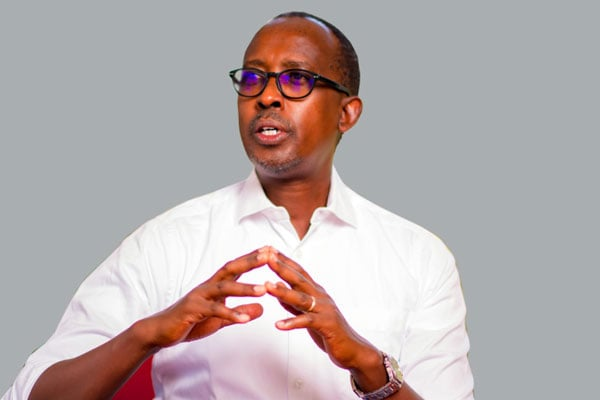
Presidential advisor and businessman Odrek Rwabwogo has renewed calls for increased value addition in Uganda’s coffee industry, warning that the country continues to lose massive potential earnings by exporting raw beans instead of processed products.
In a post shared on X on Tuesday, Rwabwogo highlighted what he described as a longstanding imbalance in the global coffee value chain, where producing countries earn the least while processing and branding nations reap enormous profits.
“They buy our coffee cheap. They sell it for billions,” Rwabwogo wrote.
He cited trade figures showing that in 2021, Italy imported $178 million worth of Ugandan coffee in raw form, only to process and resell it at significantly higher prices.
Rwabwogo further pointed to major global coffee brands, including Illy and Lavazza, which he said earn a combined over $52 billion annually from coffee-related business.
“The problem isn’t markets. It’s value addition,” he stated.
Uganda’s Coffee Backbone
Coffee remains Uganda’s leading export commodity and one of the biggest sources of foreign exchange, supporting millions of households across the country, particularly in regions such as Bugisu, West Nile, Ankole, and Central Uganda.
According to government and industry reports, Uganda produces both Robusta and Arabica coffee, with Robusta accounting for the largest share of national output. Despite the crop’s importance, the bulk of Uganda’s exports are still shipped as unprocessed green beans, limiting earnings and job creation.
Economists and industry stakeholders have repeatedly argued that without domestic processing, branding, and packaging, Uganda will continue to miss out on the most profitable stages of the coffee value chain.
Ongoing Push for Industrialisation
Rwabwogo’s remarks come amid a broader national push to expand agro-industrialisation under government programs aimed at boosting manufacturing and increasing exports of finished goods.
Over the years, the government has promoted coffee roasting and instant coffee production, including through initiatives encouraging private investment in processing plants. Uganda has also introduced policies aimed at increasing local consumption and improving farmer incomes through better market structures.
However, challenges such as limited industrial capacity, high electricity costs, financing constraints, and gaps in global branding have continued to hinder the sector’s transformation.
Calls for Strategic Shift
Rwabwogo’s comments have reignited debate on Uganda’s long-standing dependence on raw commodity exports, with analysts noting that value addition could increase export earnings, create jobs, and strengthen Uganda’s bargaining power in international trade.
Observers say that while Uganda is among Africa’s leading coffee producers, its earnings remain far below potential because the country is not yet fully positioned in processing, packaging, and global marketing.
Rwabwogo urged Ugandans and policymakers to focus on building industries that can retain more value within the country, rather than relying on export of raw materials.
Uganda’s coffee exports continue to grow in volume, but experts argue that meaningful transformation will only be achieved when the country exports finished coffee products capable of competing on international supermarket shelves.
Rwabwogo, as Chairperson of the Presidential Advisory Committee on Exports and Industrial Development (PACEID), is a prominent advocate for transforming Uganda’s coffee sector through value addition, aiming to move from exporting raw beans to roasted, packaged coffee. He promotes boosting farmer income, reducing cartels, and establishing local processing factories, such as in Bugisu, to increase global competitiveness.