

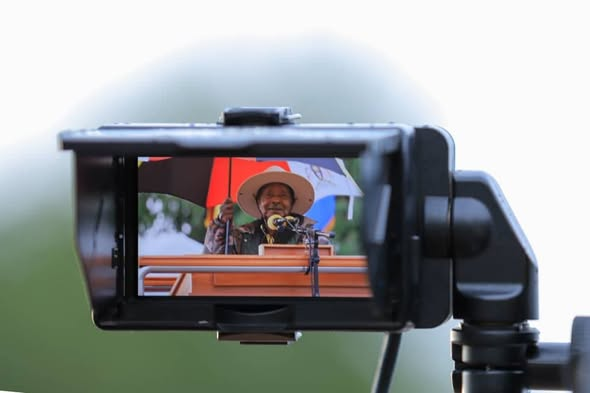
President Yoweri Kaguta Museveni has accused the National Unity Platform (NUP) of manipulating votes in the recent elections, asserting that 2.7 million fake votes were introduced into the system.
The President made the comments while defending the use of Biometric Voter Verification (BVVK) machines during the polls, citing their role in securing victories for NRM candidates in key districts.
“In the last elections, this NUP group infiltrated 2.7 million fake votes into the system. That is why I insisted on the use of BVVK machines, which were used in Bulambuli and led to the defeat of Bobi Wine and Nandala,” Museveni said.
The President traced Uganda’s electoral challenges back to the 1960s, noting that NRM’s mission has always been to ensure Ugandans are in charge of their country through free and fair elections by secret ballot. He criticized earlier political parties, including UPC and Kabaka Yekka, for practices such as violence, multiple voting, ballot stuffing, and result manipulation.
Museveni also cited Masaka as an example of BVVK effectiveness, stating that NRM won 43 out of 52 positions in the district using the biometric system.
However, questions have been raised about the functionality of the BVVK machines, which were reported to have failed during the presidential and parliamentary elections. Joel Ssenyonyi, NUP spokesperson, highlighted the inconsistency: “We spent nearly Shs 400 billion to purchase Biometric Voter Verification machines. But the machines failed to work on election day. Yet they worked two days ago during the Local Government Council elections. What miracle happened?”
The dispute over BVVK performance has intensified debate about the credibility of the elections and the role of technology in ensuring transparent voting. Analysts say these contrasting narratives highlight ongoing tensions between government authorities and opposition parties regarding electoral integrity in Uganda.
The discussion underscores the need for further scrutiny and independent audits of electronic voting systems to build public confidence ahead of future elections.