

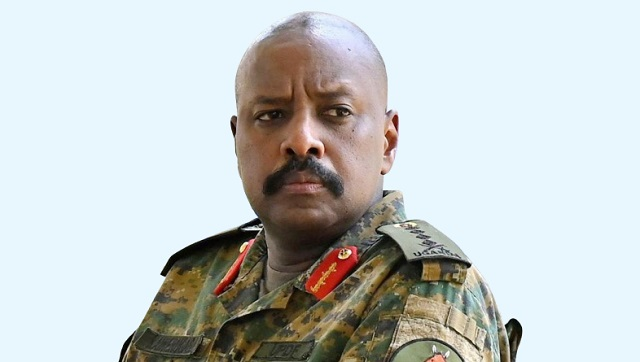
Tensions between Uganda and the United States escalated this week as General Muhoozi Kainerugaba, the Chief of Defence Forces and son of President Yoweri Museveni, issued defiant remarks in response to calls from U.S. lawmakers for targeted sanctions against him.
The exchange follows Uganda’s disputed January 2026 general elections, marred by allegations of violence, human rights abuses, and irregularities.
The controversy intensified after U.S. Senator Jim Risch, Chairman of the Senate Foreign Relations Committee, publicly urged the Trump administration to impose sanctions on General Muhoozi.
In a statement on X (formerly Twitter), Risch described Muhoozi’s recent social media activity as having “crossed a red line,” calling for a reevaluation of U.S. security ties with Uganda, including potential sanctions and reduced military cooperation.
“Commander @mkainerugaba has crossed a red line and now the U.S. must reevaluate its security partnership, which includes sanctions, and military cooperation with Uganda. The president’s son, and likely successor, cannot just delete tweets and issue hollow apologies. The U.S. will not tolerate this level of instability and recklessness when American personnel, U.S. interests, and innocent lives in the region are at stake.”
Risch’s remarks referenced Muhoozi’s inflammatory posts amid post-election unrest, including claims of responsibility for the deaths of opposition supporters labelled as “terrorists,” and accusations against the U.S. Embassy in Kampala of aiding opposition leader Bobi Wine’s evasion of authorities.
In direct response, General Muhoozi posted a series of defiant statements on X, vowing reciprocal action if sanctions were imposed on him or Uganda.
“If some spoilers in the USA sanction me or Uganda for anything we shall respond by sanctioning them too.”
He further emphasised Uganda’s sovereignty and readiness to retaliate, stating that while the country seeks peace, it possesses the capacity to “defeat any invader.”
The remarks came shortly after Muhoozi had briefly suspended military cooperation with the U.S. and accused embassy officials of undermining bilateral ties—claims he later retracted with an apology, attributing them to misinformation.
Muhoozi later deleted the posts and issued a public apology. “I want to apologise to our great friends, the United States, for my earlier tweets that I have now deleted. I was being fed wrong information. I have spoken with the US Ambassador to our country, and everything is okay. We are going to continue our military cooperation as usual.”
Despite the apology, Risch dismissed it as insufficient, rejecting it outright and reiterating calls for accountability. “The President’s son, and likely successor, cannot just delete tweets and issue hollow apologies.”
The diplomatic spat has raised concerns about potential broader implications for U.S.-Uganda relations, including security partnerships and aid.
General Muhoozi’s outspoken style has previously drawn international criticism, but these latest exchanges—tied to the contentious election and human rights allegations—have prompted explicit sanctions threats from Washington.
Ugandan officials and supporters have pushed back, with some arguing that sanctions would unfairly target the nation rather than individuals.
Veteran journalist Andrew Mwenda noted historical precedents of U.S. actions against global figures, suggesting General Muhoozi “doesn’t mind USA sanctions,” citing past cases involving leaders like Nelson Mandela.
As of February 2, 2026, no formal sanctions have been announced against General Muhoozi or Uganda, but the rhetoric signals a potential shift in bilateral dynamics amid ongoing scrutiny of the Museveni government’s handling of the elections and opposition.