

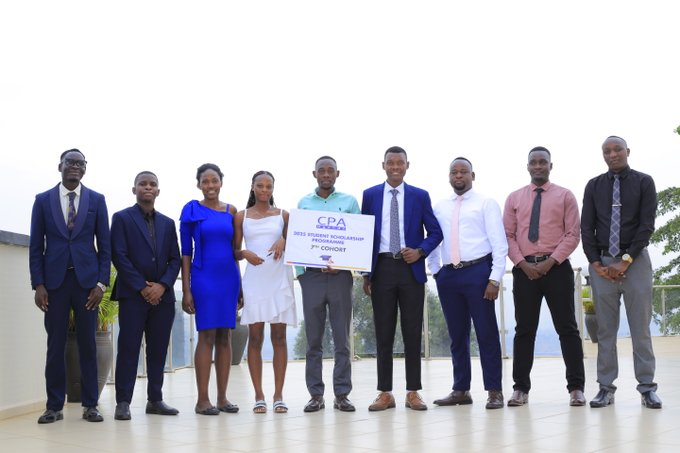
Discipline, integrity and consistency are the pillars that will define the next generation of professional accountants, CPA Stephen Muchelule, Manager, Business Risk Services at Grant Thornton Advisory East Africa, has said.
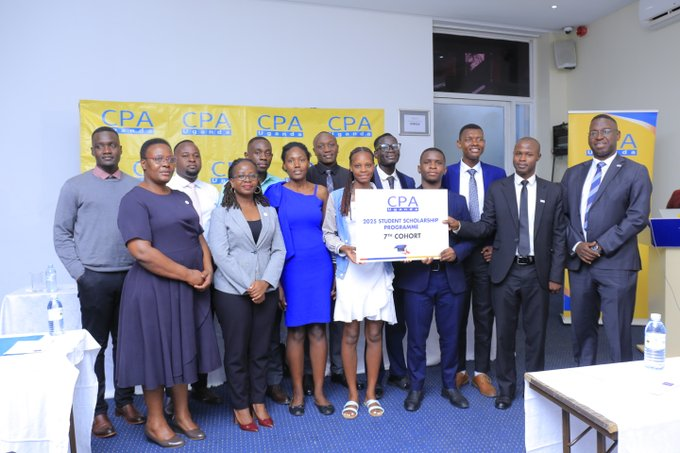
Muchelule was speaking as the Guest of Honour during the unveiling of the seventh cohort of beneficiaries of the Institute of Certified Public Accountants of Uganda (ICPAU) Student Scholarship Programme and the launch of the 2026 scholarship intake at Protea Hotel by Marriott Kampala Skyz.
Addressing the 10 newly selected scholars, Muchelule described the scholarship as “a transfer of confidence and belief” and warned beneficiaries against taking the opportunity lightly.
“Opportunities like these do not come twice. When my own scholarship ended, the programme itself was discontinued. So please understand this clearly — opportunity comes once,” he said.

Now in its eighth edition, the ICPAU Student Scholarship Programme supports high-performing graduates to pursue the Certified Public Accountants (CPA) qualification. The 2025 Cohort 7 beneficiaries emerged from 351 applicants drawn from 28 universities across the country.
Muchelule, who was serving as Guest of Honour for the second time, shared his personal journey as a CPA tutor, mentor and professional auditor, emphasising that success in the accounting profession is built quietly through discipline rather than comfort.
“Each of us receives the same 24 hours every day. The difference is how we use them. Every delay in life is expensive, and every act of procrastination has a cost,” he said.
He challenged the scholars to manage their time deliberately, cautioning against distractions, particularly excessive use of social media. “Be very careful with social media. It can either build your future — or silently destroy it,” Muchelule warned.
Drawing from his experience as a CPA lecturer, he recounted mentoring a student who had failed an Advanced Tax paper three times but eventually passed after committing to discipline and consistency.
“That moment reinforced to me the power of guidance, persistence and belief. If 16 out of 95 candidates can pass, it means passing is possible,” he said, urging students to confront difficult papers with courage rather than fear.
Muchelule outlined what he termed the “Four Cs” of a great accountant: competence, character, consistency and courage. He stressed that integrity is non-negotiable in a profession built on trust.
“Integrity is the signature of a CPA. Without it, nothing else matters,” he said, adding that ethics are more critical than ever in an era of artificial intelligence and automated systems.
ICPAU President CPA Timothy Ediomu said the scholarship programme aligns with the Institute’s mission of developing accountants for sustainable national impact.
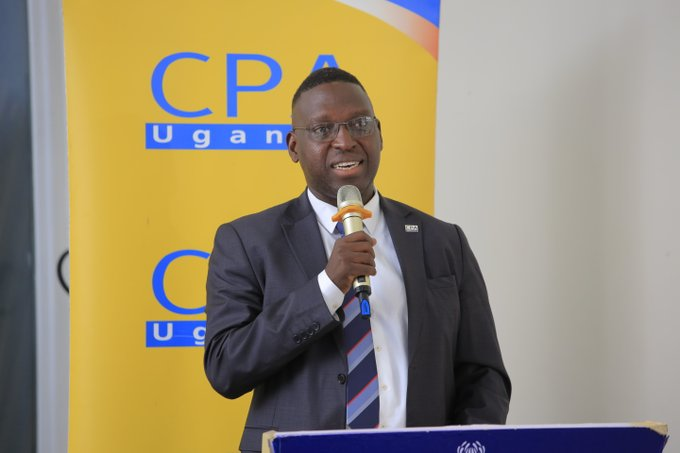
“The ICPAU Student Scholarship Programme presents students with the opportunity to enhance their skills and position themselves to step boldly into the future with world-recognised professional accountancy skills,” Ediomu said.
He noted that CPA qualification enhances competitiveness both locally and globally, adding that ICPAU membership opens doors across multiple sectors of the economy.
CPA Salome Seruyange, representing the Chairperson of the Education and Research Committee, said the programme is a deliberate investment in ethical and competent professionals.

“Through the Scholarship initiative, ICPAU invests in nurturing competent, ethical and impactful accountants who will contribute to the growth of the profession,” she said, noting that the programme has supported 70 beneficiaries since its launch in 2019.
The 10 Cohort 7 beneficiaries will sit their first CPA examinations in May 2026 and are expected to complete the programme within two and a half years.
During the same event, ICPAU officially launched the 2026 edition of the Student Scholarship Programme, inviting applications from graduates who completed their Bachelor’s degrees in 2025 with first-class or second-class upper honours from public or National Council for Higher Education–recognised universities.