

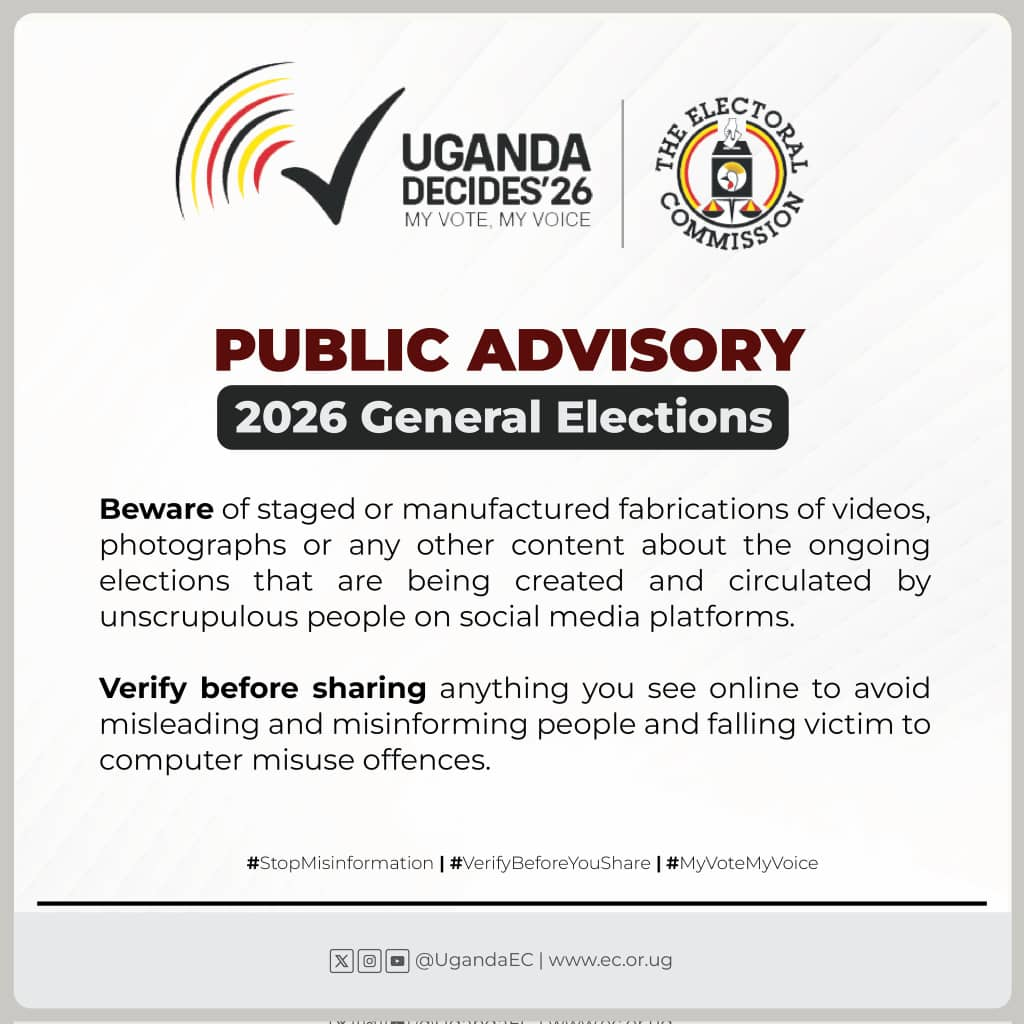
The Electoral Commission (EC) has raised concerns over an increasing spread of election-related misinformation following the 2026 General Elections.
In an advisory issued on Thursday under the Uganda Decides ’26 banner, the Commission cautioned voters against a surge in fabricated images, manipulated videos, and misleading online content circulating on social media platforms. The EC said the misinformation campaign appears increasingly sophisticated, with digitally altered footage and staged incidents designed to mislead the public and undermine confidence in the electoral process.
According to the Commission, the problem has intensified in recent weeks as unofficial results from polling centres begin to circulate online.
“We are observing a growing volume of staged and manufactured content being widely shared, posing a serious risk to the credibility of the elections,” a source involved in the EC’s digital monitoring efforts said. “Some of this material is difficult to identify without advanced verification tools.”
Digital Propaganda on the Rise
The warning comes amid record levels of social media usage in Uganda, where political messaging spreads rapidly across platforms such as X (formerly Twitter), WhatsApp, TikTok, and Facebook.
Analysts note that misinformation has evolved beyond simple rumours. Voters are now encountering altered photographs, AI-generated audio clips, and videos shared without proper context—making deception harder to detect.
Security experts warn that such tactics are often intended to fuel distrust, incite tension, and manipulate public opinion during sensitive electoral periods.
Voters Urged to Verify Information
The Electoral Commission has urged citizens to exercise caution when consuming and sharing election-related content online. Voters are encouraged to verify information through official and credible sources before forwarding it.
The advisory also reminds the public that circulating false or misleading information could carry legal consequences, as the Computer Misuse Act criminalizes the intentional spread of harmful digital content.
Growing Fears Over Election Integrity
Civil society organisations have welcomed the EC’s warning, pointing out that misinformation has previously contributed to unrest, particularly in urban areas where young voters rely heavily on social media for political news.
Technology experts are calling for expanded digital literacy initiatives—especially in rural communities—to help voters identify manipulated content ahead of final vote tallies. Meanwhile, fact-checking organisations report being overwhelmed by the growing volume of false political claims requiring verification.