

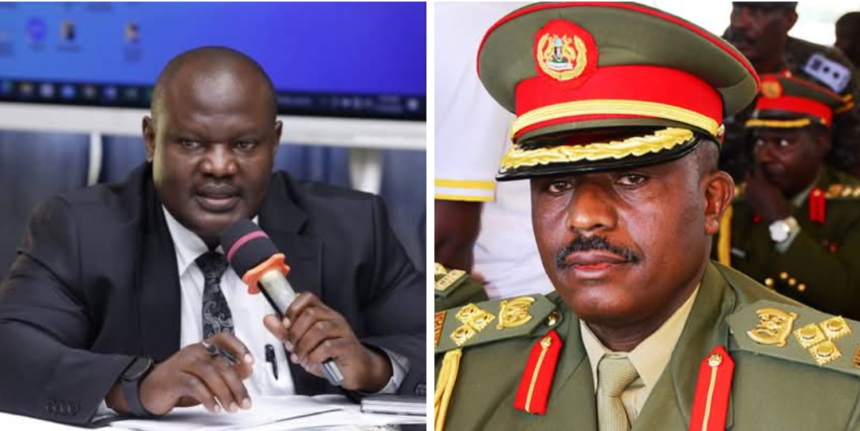
KAMPALA — President Yoweri Kaguta Museveni has directed three senior officials from the Ministry of Internal Affairs and the Uganda Police Force to step aside as investigations intensify into an alleged Shs31 billion corruption scandal linked to Uganda’s national CCTV surveillance project.
The officials affected are Lt. Gen. Joseph Musanyufu, the Permanent Secretary in the Ministry of Internal Affairs; Mr Aggrey Wunyi, the Under-Secretary of the Uganda Police Force; and Assistant Inspector General of Police Felix Baryamwitsakyi.
Sources familiar with the investigations say the decision followed preliminary findings by security and anti-corruption agencies pointing to suspected irregularities in procurement processes and financial management surrounding the multi-billion-shilling CCTV programme.
The move has sparked fresh public debate over transparency and accountability within Uganda’s security sector, particularly regarding large government-funded surveillance and technology projects.
The CCTV project was introduced by government as part of wider efforts to strengthen national security following a series of high-profile assassinations, armed robberies, kidnappings, and violent attacks that shook the country several years ago.
Thousands of surveillance cameras were subsequently installed across Kampala and other major urban centres to support intelligence gathering, monitor public spaces, improve traffic management, and assist criminal investigations.
Government officials have repeatedly defended the project, saying the CCTV network has significantly improved the ability of security agencies to detect suspects, track criminal movements, and respond to security threats in real time.
Police have previously credited the system for helping solve murder cases, robberies, kidnappings, and terrorism-related incidents.
However, despite the project’s security successes, concerns over procurement costs, contract confidentiality, and allegations of inflated expenditure have persisted since its rollout.
Opposition leaders, accountability activists, and sections of civil society have repeatedly demanded greater transparency over how billions of taxpayers’ money allocated to the surveillance programme were spent.
The latest investigations reportedly centre on allegations that approximately Shs31 billion may have been irregularly paid out through questionable procurement procedures, contract approvals, and suspected manipulation of payment systems.
Investigators are also said to be examining claims of abuse of office, bribery, and possible collusion involving public officials and private contractors linked to the CCTV contracts.
Although authorities have not publicly disclosed the full details of the alleged scheme, sources indicate that the investigations could widen further and potentially implicate additional officials and service providers connected to the surveillance project.
President Museveni’s decision to send the officials on leave is understood to be aimed at preventing possible interference with ongoing investigations and allowing anti-corruption agencies to carry out inquiries independently.
The development is being viewed by many observers as one of the most significant anti-corruption actions involving senior officials in Uganda’s security establishment in recent years.
Lt. Gen. Musanyufu is regarded as one of the country’s most senior public administrators within the security sector. Before becoming Permanent Secretary at the Ministry of Internal Affairs, he served as Commissioner General of Prisons and played a major role in overseeing several state security institutions.
Mr Aggrey Wunyi, as Under-Secretary of the Uganda Police Force, occupies a powerful administrative office responsible for key operational, procurement, and financial functions within the police institution.
AIGP Felix Baryamwitsakyi has also held several influential positions within the Uganda Police Force and has previously been associated with intelligence and operational assignments during his career.
By Friday evening, none of the three officials had publicly responded to the allegations or commented on the President’s directive.
The investigations are expected to involve multiple agencies, including the State House Anti-Corruption Unit, the Criminal Investigations Directorate (CID), the Inspectorate of Government (IGG), and other specialised security and financial intelligence units.
The scandal is expected to attract widespread public interest given the scale of the funds involved and the seniority of the officials named in the probe.
Uganda has over the years faced repeated criticism from anti-corruption campaigners and civil society organisations over persistent allegations of misuse of public resources within government institutions.
Reports from the Auditor General and parliamentary accountability committees have frequently raised concerns over procurement irregularities, unexplained expenditures, weak oversight systems, and financial mismanagement in major public projects.
Security-related procurements, however, often operate under a layer of secrecy due to national security considerations, making independent scrutiny more difficult.