

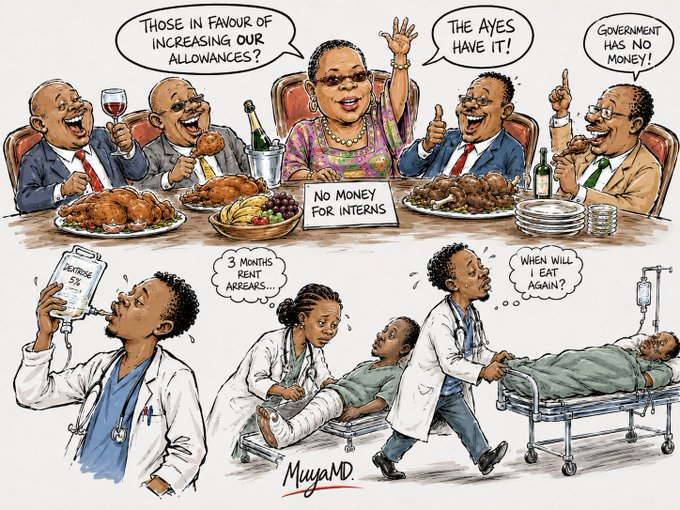
KAMPALA, Uganda — Health Minister Dr Chris Baryomunsi has said he is preparing a Cabinet paper seeking a review of the government’s controversial medical internship policy following growing concerns from Members of Parliament, health professionals and medical students.
Speaking during Parliament’s plenary sitting on Tuesday, July 14, 2026, Baryomunsi acknowledged that the policy had sparked widespread debate and said he would ask Cabinet to reconsider the decision.
“I am drafting a Cabinet paper to have this policy decision reviewed,” Baryomunsi told MPs, explaining that since the policy was approved by Cabinet, any amendments must also go through the same process.
The proposed policy provides for government-sponsored medical graduates to continue receiving full financial facilitation during their mandatory one-year internship, while privately sponsored graduates would be required to cover most of their own expenses. The Ministry of Health has, however, indicated that it is considering limited support measures, including providing meals for privately sponsored interns.
Government has justified the policy change, citing the increasing number of medical graduates from both public and private universities, which has placed pressure on resources allocated for internship facilitation. Officials have also maintained that internship is a component of professional training rather than formal employment.
The position has faced resistance from medical professionals and students, who argue that interns play a critical role in Uganda’s health system and should not be treated differently based on how they financed their education.
They have pointed out that medical interns work alongside other health workers, often undertaking long hours, night shifts and weekend duties while supporting service delivery in hospitals facing staffing challenges.
During Tuesday’s parliamentary sitting, several MPs questioned whether it was fair to separate medical graduates based on their sources of university funding when they perform similar responsibilities during internship.
The debate follows Baryomunsi’s recent unannounced late-night visit to Mbarara Regional Referral Hospital, where he found overcrowded wards, overstretched health workers and interns playing a significant role in patient care.
The visit highlighted the existing pressures within Uganda’s public health system and the reliance of health facilities on interns to support medical services.
Medical internship remains a mandatory requirement for doctors, pharmacists, nurses and other health professionals before they can obtain full professional registration and practise independently.
Health sector professional bodies have urged government to find a balance between managing public expenditure and ensuring that young health workers receive adequate support during internship.
Cabinet’s response to the proposed review is expected to be closely monitored by thousands of medical graduates awaiting internship placements, as well as public health facilities that depend on interns to strengthen healthcare delivery.