

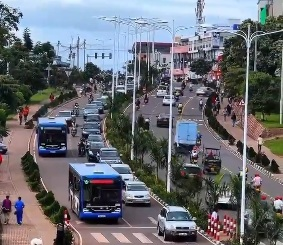
KIGALI, Rwanda — Traffic congestion in Kigali is showing early signs of improvement following the rollout of dedicated bus lanes on key roads, a move city authorities say is aimed at modernising public transport and reducing emissions.
The City of Kigali officially introduced the “bus-only” lanes on April 24, 2026, restricting the right-hand lane to public buses during peak hours — from 6:00 a.m. to 10:00 a.m. and 5:00 p.m. to 9:00 p.m. The measure is currently being implemented along four major corridors, including the busy Remera–Rwandex–Downtown stretch.
Early feedback from commuters and drivers suggests the initiative is already easing traffic flow. Videos and posts shared on X (formerly Twitter) show buses moving steadily through previously congested routes, while other lanes remain open to general traffic.
According to posts by KT Press Rwanda, the new system is part of broader preparations for the arrival of more than 400 electric buses expected to be integrated into the city’s transport network. The shift is intended to encourage residents to opt for public transport over private vehicles, cutting both congestion and carbon emissions.
Local users on social media have largely welcomed the change. One post described the city as becoming “more organised and people-centred,” while another highlighted faster and more efficient bus movement during peak hours. A video shared by Kigali residents showed smooth traffic flow along a 5-kilometre stretch that is typically gridlocked during rush hour.
City officials say enforcement has been key to the early success of the program. Traffic police have been deployed along the designated routes to ensure compliance, supported by clear road signage indicating restricted lanes and operating hours.
The initiative aligns with Rwanda’s broader environmental and urban mobility goals, positioning Kigali as a regional leader in sustainable transport. The planned introduction of electric buses is expected to further strengthen these gains by reducing reliance on fossil fuels.
However, some residents have raised concerns about access in suburban areas not yet covered by the new system, calling for the expansion of bus lanes and routes to ensure more inclusive benefits.
Authorities have indicated that this is only the first phase, with additional bus lanes and improvements to public transport infrastructure expected in the coming months.
While the long-term impact remains to be seen, early indications suggest Kigali’s experiment with dedicated bus lanes could offer a model for other fast-growing African cities grappling with congestion and urban mobility challenges.