

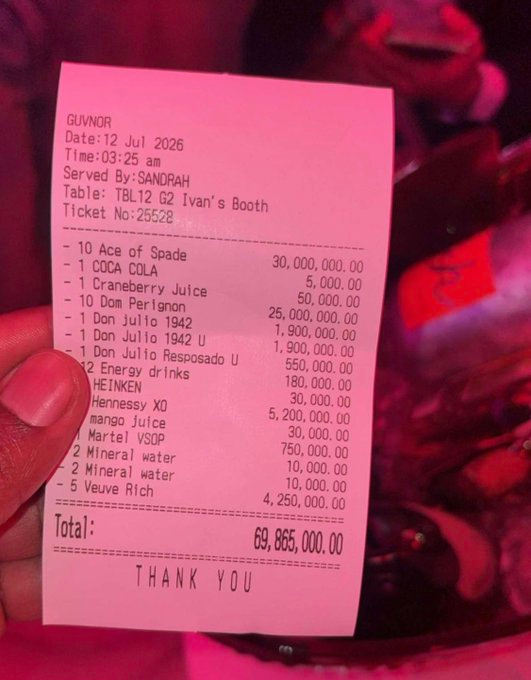
KAMPALA — A bar receipt showing a large single-night expenditure by an unidentified customer has sparked widespread discussion online, with Ugandans debating wealth, inequality and the growing culture of luxury nightlife in the capital.
The discussion began after social media personality Kirya Ug shared an image of a bill from a high-end Kampala entertainment venue, showing a spending amount that drew surprise from many users across social media platforms, including X and WhatsApp.
The receipt quickly went viral, prompting mixed reactions. While some users expressed amazement at the level of spending displayed, others questioned the contrast between such lavish entertainment expenses and the economic realities faced by many Ugandans.
Several commentators used the bill to highlight what they described as the widening gap between different economic groups in the country, noting that for many citizens, the amount spent in one night would represent years of savings.
“We are operating in two completely different Ugandas,” one social media user commented, reflecting on the contrast between luxury consumption and the daily financial struggles experienced by many households.
Others questioned the source of such disposable income, sparking broader conversations about wealth creation, business success, income distribution and the visibility of high-net-worth individuals in Uganda’s economy.
The incident has also drawn attention to Kampala’s expanding premium hospitality and entertainment industry, where a growing number of upscale restaurants, lounges and clubs cater to customers willing to spend heavily on exclusive experiences.
Industry observers note that luxury spending at high-end venues has become increasingly visible among a segment of Kampala’s affluent population, with expensive drinks, private events and premium services becoming symbols of social status.
However, the viral receipt has also renewed debate about economic inequality, especially in a country where many households continue to face challenges related to employment, household incomes and the rising cost of living.
Neither the identity of the customer behind the bill nor the authenticity of the receipt could be independently verified at the time of publication.