

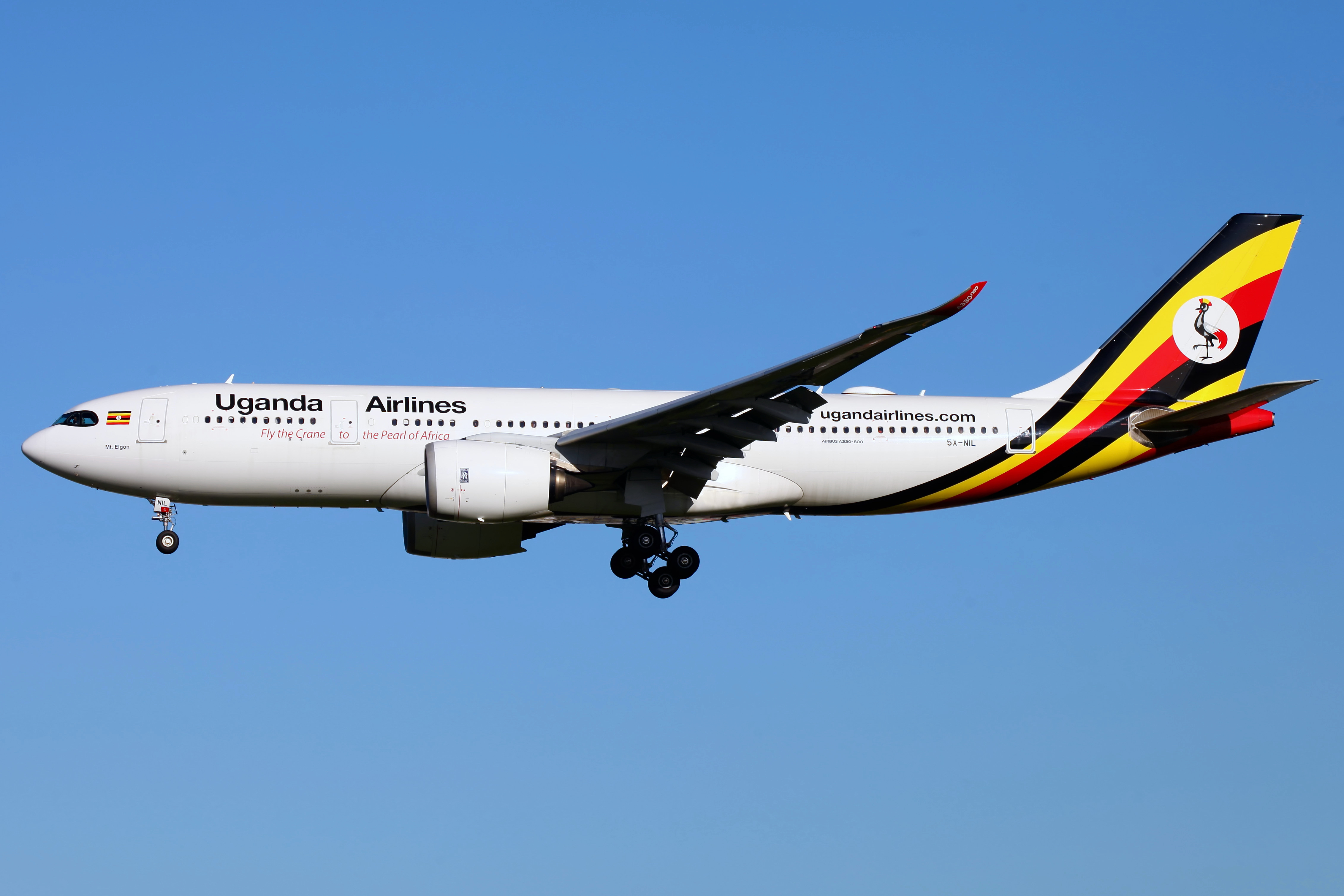
ENTEBBE, Uganda – Uganda Airlines has signed a landmark agreement with aircraft manufacturer Boeing to acquire 10 new aircraft worth approximately $985 million (about Shs3.7 trillion), in a move aimed at expanding the national carrier’s fleet and strengthening Uganda’s position as a regional aviation hub.
The agreement was signed on June 10, 2026, at State House Entebbe in the presence of President Yoweri Kaguta Museveni.
According to officials, the fleet expansion package includes four Boeing 787-9 Dreamliners for long-haul international routes, four Boeing 737 MAX aircraft for regional operations, and two converted freighter aircraft to boost cargo transportation.
Uganda Airlines Chief Executive Officer Girma Wake signed on behalf of the national carrier, while Boeing Vice President for Commercial Sales and Marketing in Africa Anbessie Yitbarek signed for the aircraft manufacturer.
Witnessing the signing ceremony, President Museveni described the acquisition as a major milestone in Uganda’s aviation development strategy and efforts to enhance connectivity with global markets.
In a statement released after the event, State House said the fleet expansion would strengthen trade, tourism, investment, and cargo transportation while supporting Uganda’s ambition to become a key aviation and logistics hub in East Africa.
“The fleet expansion, which includes passenger and cargo aircraft, will strengthen trade, tourism, and investment, and position Uganda as a key regional aviation hub,” the statement noted.
The acquisition is expected to significantly increase Uganda Airlines’ operational capacity, enabling the carrier to open new international routes while improving efficiency on existing regional destinations.
Officials said the additional Dreamliners will support long-haul services to destinations in Europe, Asia, and the Middle East, while the Boeing 737 MAX aircraft will serve regional and continental routes. The freighter aircraft are expected to boost Uganda’s air cargo capacity, particularly for exports of fresh agricultural produce and other goods.
Supporters of the deal argue that the investment aligns with Uganda’s Vision 2040 development agenda, which seeks to transform the country into a middle-income economy through strategic infrastructure investments and improved connectivity.
However, the acquisition is also likely to attract scrutiny from critics who have questioned the financial performance of Uganda Airlines since its revival in 2019. The national carrier has reported cumulative losses exceeding Shs1 trillion over the years, amid concerns about maintenance costs, route profitability, and the sustainability of continued government investment.
Questions have also been raised about how the acquisition will be financed at a time when the government faces competing demands for funding in sectors such as health, education, and public infrastructure.
Despite the concerns, aviation industry observers say the expanded fleet could provide long-term economic benefits if accompanied by effective route planning, strong management, and growth in passenger and cargo traffic.
The deal marks one of the largest aviation investments in Uganda’s history and signals the government’s continued commitment to building a competitive national airline capable of serving as a catalyst for trade, tourism, and economic growth.