

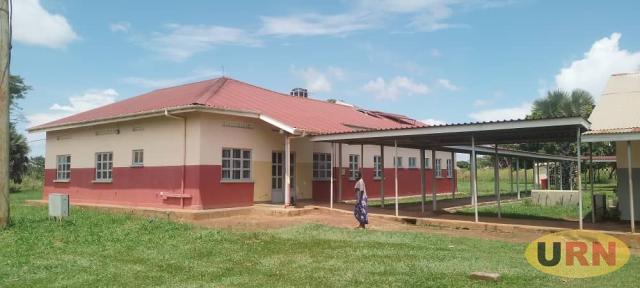
PADER, Uganda — Essential health services at Pajule Health Centre IV in Pader District have been disrupted after the National Water and Sewerage Corporation (NWSC) disconnected the facility’s piped water supply over an outstanding bill of Shs2.6 million.
The health centre has reportedly been without piped water for about two weeks, forcing medical workers and patients to depend on a single borehole for their water needs.
Dr Denis Odongkara, the facility’s in-charge, said the situation has particularly affected the maternity and laboratory departments, where water is needed for routine operations and maintaining hygiene.
The borehole is shared by the health centre and residents from the surrounding community. The shortage has therefore resulted in long queues, with patients and community members spending considerable time waiting to collect water.
Brilliant Tito Okello, the Pajule Town Council chairperson, said the health centre’s water debt has continued to grow partly because people from the community also use the facility’s water source.
Okello said the facility receives Shs500,000 every quarter to meet its water costs. However, the allocation has not been enough to clear the growing bill, which has now reached Shs2.6 million.
Local leaders have asked NWSC to restore water supply to critical areas of the facility, particularly the maternity and laboratory units, to avoid further disruption of medical services.
Okello said the local authorities would also work with residents to encourage the repair and maintenance of community boreholes, some of which have reportedly been non-functional for the past two years.
He said authorities also intend to strengthen security at the health centre to control unauthorised access to its water facilities.
Pajule Health Centre IV serves an average of 250 patients every day through its outpatient and inpatient departments.
Patrick Okumu, NWSC’s Pader Branch manager, said the corporation had held discussions with the health centre administration and agreed to reconnect water to the critical units.
However, Okumu accused the facility management of failing to give water payments adequate priority, alleging that funds meant for essential utilities had been diverted to other activities.
He urged the health centre to prioritise clearing the outstanding water bill, warning that prolonged water shortages could have serious consequences for healthcare delivery.
Okumu also said NWSC was yet to establish the facility’s total outstanding debt because Pajule Health Centre IV operates three separate water accounts.
The planned reconnection of the critical units is expected to provide some relief, although the broader challenge of clearing the accumulated debt and ensuring a sustainable water supply remains unresolved.