

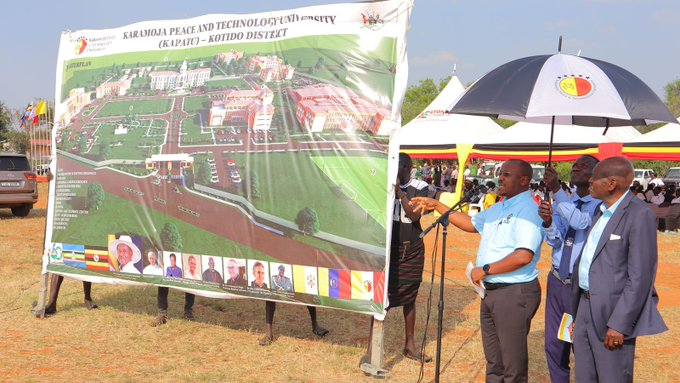
KAMPALA — A dispute between Uganda’s higher education regulator and promoters of the proposed Karamoja Peace and Technology University (KAPATU) has stalled progress on what would be the first public university in the Karamoja sub-region, with both sides trading sharply conflicting claims over governance and legal compliance.
The standoff came to light during a sitting of the Sectoral Committee on Education of the Parliament of Uganda on April 9, 2026, where officials from the National Council for Higher Education (NCHE) said the project had failed to meet accreditation standards.
NCHE Executive Director Mary J. N. Okwakol told lawmakers that KAPATU’s proposed governance structure does not comply with legal requirements under the Universities and Other Tertiary Institutions Act. She further noted that the institution—founded as a Catholic Church initiative—was improperly seeking public university status, which is not permitted under current guidelines.
According to Okwakol, the promoters had been advised to pursue accreditation as a private university but had resisted the recommendation, contributing to the project’s delay.
However, KAPATU promoters have strongly rejected the regulator’s position, accusing NCHE of misrepresentation and attempting to derail a project they describe as critical to the transformation of Karamoja.
In a statement issued on April 13, the promoters insisted they followed the correct procedures and applied for a provisional licence as a private institution in October 2025. They pointed to a Letter of Interim Authority issued in April 2024 as evidence of compliance and progress.
The university’s backers also highlighted what they described as substantial readiness to operationalize the institution. They cited financial support from Yoweri Kaguta Museveni, who has reportedly pledged UGX 30 billion to the project, alongside international commitments amounting to approximately EUR 300 million for infrastructure and development.
They further stated that construction of key facilities, including an administration block, is underway, and that the institution sits on more than 150 acres of land—well above minimum requirements.
A major point of contention remains the role of the Catholic Church in the university’s governance. While NCHE raised concerns about the structure, promoters argued that religious institutions are legally permitted to establish and manage universities, citing constitutional provisions and church law.
Lawmakers, particularly from the Karamoja region, expressed frustration at the impasse and called for dialogue between the regulator and the promoters. Several MPs emphasized the strategic importance of the university in promoting peace, expanding access to higher education, and driving economic development in one of Uganda’s historically underserved regions.
Despite the dispute, legislators pledged continued support for the project and committed to follow up with relevant authorities to ensure its eventual realization.
The outcome of the disagreement now hinges on whether NCHE and KAPATU’s promoters can reconcile their positions on governance and accreditation—issues that remain central to unlocking the future of higher education in Karamoja.