

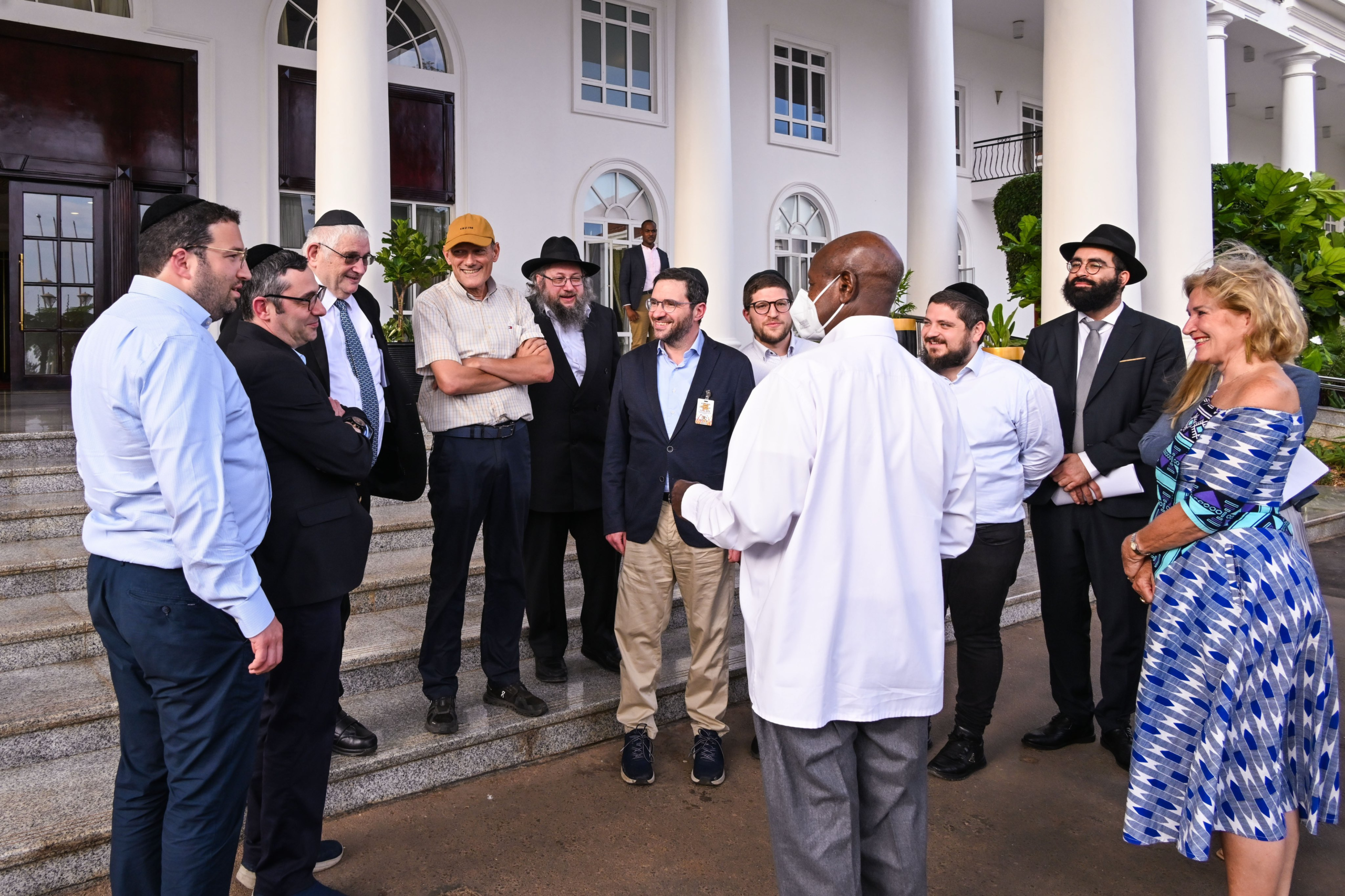
ENTEBBE, Uganda – President Yoweri Kaguta Museveni on Tuesday hosted Mr. Gilbert Weill, a survivor of the 1976 Entebbe Airport hijacking, together with his family and friends at State House Entebbe, nearly 50 years after one of the most dramatic incidents in aviation history.
Mr. Weill, a Belgian rabbi, was accompanied by his sons, grandchildren and more than 30 members of his delegation during the visit, which included a tour of the preserved old Entebbe Airport terminal where hostages were held during the hijacking.
The reunion served as both a commemoration of the 1976 ordeal and a reflection on Uganda’s transformation since the era of former President Idi Amin.
Speaking during the meeting, President Museveni described the hijacking as a tragic event but said the subsequent rescue operation marked a turning point in Uganda’s history.
“Although the hijacking was a tragedy, the rescue operation became a turning point and marked the beginning of the collapse of the Idi Amin regime,” President Museveni said.
The President reflected on Uganda’s journey from years of political instability to the peace and development the country enjoys today.
“I shared Uganda’s journey from those difficult days to the peace, stability and progress we enjoy today,” he said.
President Museveni also used the occasion to call for stronger economic cooperation between Uganda, Israel and Europe, particularly in sectors that can drive industrialisation and job creation.
“There is a need to strengthen economic cooperation between Uganda, Israel and Europe, especially in value addition and agro-industrialisation,” he noted.
The 1976 hijacking involved an Air France aircraft that was diverted to Entebbe by pro-Palestinian and German militants, who held more than 100 passengers hostage with the backing of the Amin regime. The crisis ended when Israeli commandos carried out a daring rescue mission that freed most of the hostages and drew international attention to Uganda.
The visit by Mr. Weill and his family comes at a time of growing cooperation between Uganda and Israel in areas including security, agriculture, technology and trade.
The emotional return to Entebbe offered an opportunity for remembrance and reconciliation while underscoring the enduring ties between Uganda and the families affected by the historic incident.
The visit also highlighted Uganda’s efforts to preserve the memory of significant historical events while building stronger international partnerships for the future.