

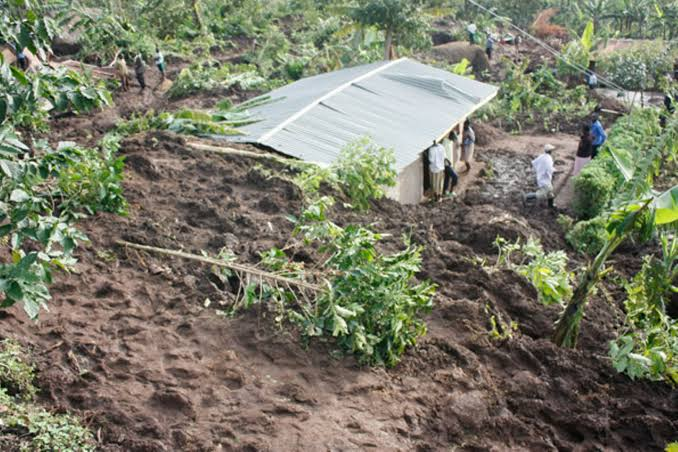
Cabinet has approved Shs62 billion to support the resettlement of households threatened by landslides in the Mount Elgon sub-region, with the first phase targeting 1,423 households in areas classified as very high risk.
The Minister for ICT and National Guidance, Justine Lumumba Kasule, said the funds would be implemented through the Office of the Prime Minister (OPM) as part of a government programme to move vulnerable communities to safer areas.
Cabinet also approved Shs8.870 billion for the purchase of 2,217.66 acres of land for the resettlement programme.
“The land has been identified and checked to confirm it is suitable for purchase,” Lumumba said.
1,423 households to receive Shs18 million each
The first phase will target 1,423 households living in areas classified as being at very high risk of landslides.
Each household will receive Shs18 million, comprising Shs8 million to purchase land and Shs10 million to support the construction of a house.
“Cabinet approved payments of Shs18 million each to 1,423 households in areas at very high risk of landslides. Each household will receive Shs8 million to buy land and Shs10 million to build a house,” Lumumba said.
Each beneficiary household will receive two acres under the resettlement arrangement.
The programme is intended to enable affected families to acquire land and establish permanent homes away from areas considered dangerous.
10,558 households remain at high risk
Government has identified an additional 10,558 households living in areas classified as high risk and requiring relocation.
Lumumba said their resettlement would require Shs190.044 billion, with Cabinet approving funding for the additional exercise through a supplementary budget.
The figures indicate that the initial 1,423-household programme covers only part of the communities exposed to landslide risks in the region.
Government will therefore have to mobilise additional resources to implement the wider relocation programme.
Beneficiaries required to vacate affected areas
Households receiving government resettlement assistance will be required to permanently leave the areas from which they are relocated and hand over the land to government.
“After receiving their resettlement support, the households will be required to leave the affected land and hand it over to Government,” Lumumba said.
She said the land would subsequently become part of an area managed by the Uganda Wildlife Authority.
The condition is intended to prevent beneficiaries from returning to areas identified as dangerous and to discourage further settlement in landslide-prone locations.
OPM to oversee programme
The Office of the Prime Minister will coordinate the resettlement programme and oversee its implementation.
Lumumba said OPM would work with the Internal Security Organisation, local governments and Parish Development Model structures to monitor the use of the funds.
The agencies will also participate in identifying beneficiaries, coordinating relocation and monitoring the use of the resettlement support.
The programme is intended to shift government’s response from emergency intervention after landslides occur to preventive relocation of households living in areas assessed as high risk.
However, the larger resettlement programme covering the 10,558 households is expected to require continued government funding and coordination.