

For years, tree planting initiatives across the country have faced a persistent challenge: low survival rates of seedlings. While commitment to reforestation has grown, threats such as termite infestations have continued to undermine progress.
In response, ECOTRUST, working with partners including NIRAS International Consulting Uganda and Green Life International, is promoting a quality-driven approach to commercial forestry under the IFPA-CD Woodlot Project.
The initiative, led by the National Environment Management Authority (NEMA) with support from the Government of Uganda and the World Bank, aims to make tree planting both environmentally sustainable and economically viable for communities.
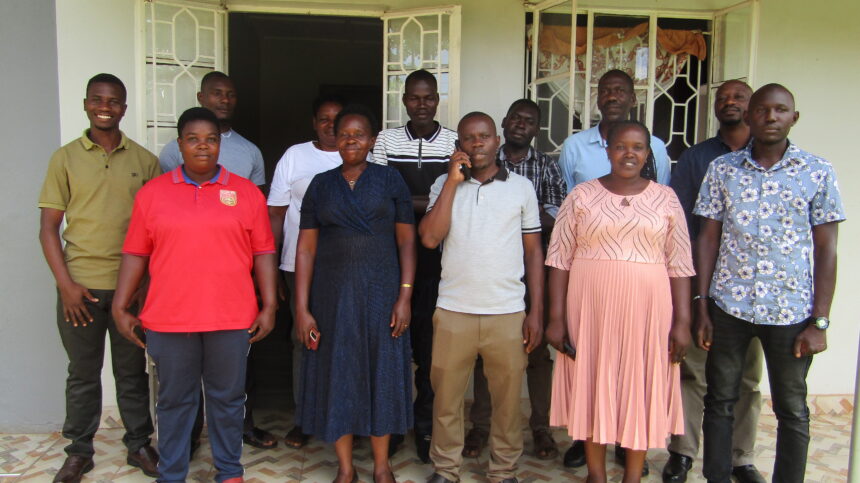
On March 25, 2026, ECOTRUST hosted a Training of Trainers (ToT) session at its Hoima offices, bringing together program officers, forest assistants, and nursery managers who serve as the frontline link between the project and local farmers.
The training emphasised practical skills and knowledge transfer, equipping participants to guide farmers in adopting best practices in commercial forestry.
A central focus of the training was quality assurance—particularly tackling termite infestations, one of the biggest threats to young trees.
Facilitating the session, experienced tree crop farmer Paul Edyangu stressed the importance of using effective, science-based solutions rather than cheaper alternatives that often fail.
“The selection of Termidor against other pesticides in the market is because of its intricate value,” Edyangu explained. “It doesn’t kill instantly, allowing termites to spread up to 50 meters from the pit where it is applied, distributing the treatment throughout the colony.”
He added that the pesticide offers extended protection at a critical stage of tree growth.
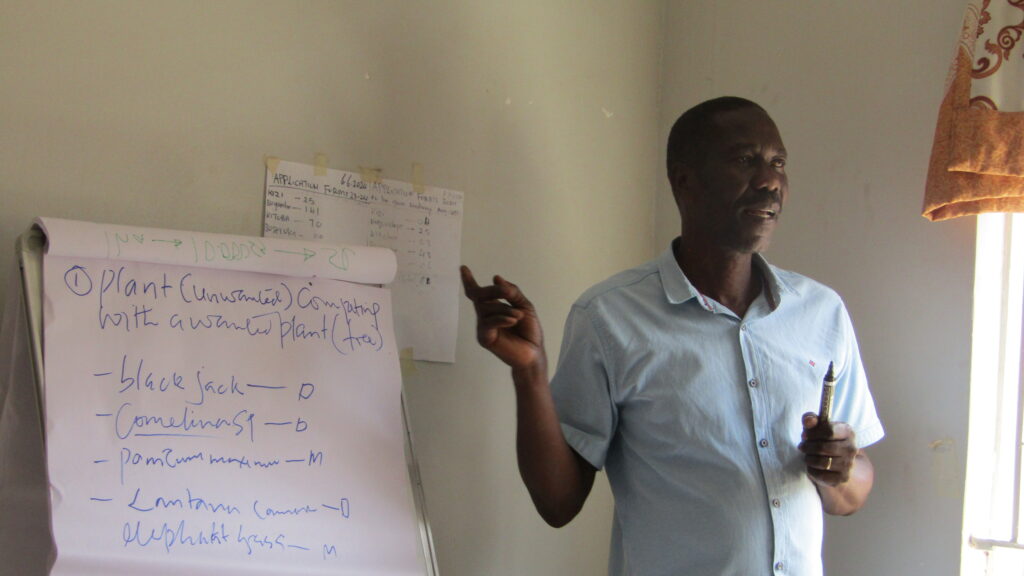
“Most importantly, a single application guards seedlings for up to 90 days, a critical window for young trees to establish themselves. It stays in the soil for up to 10 years, and one litre treats up to 64 hectares,” he said.
Unlike commonly used pesticides such as Ambush, Rabada, and Imida—which tend to repel termites rather than eliminate them—Termidor is non-repellent. This allows it to spread within termite colonies, effectively wiping them out over time.
Edyangu underscored that improving survival rates is key to achieving real impact. “By using quality termite control, we ensure the trees actually survive to maturity. This is how we move from simply planting trees to actually growing a forest,” he said.
Beyond pest control, the training also addressed environmental safeguards and the health and safety of farmers. Given the potency of the pesticide, participants were guided on proper handling and application procedures to minimise risks to both people and ecosystems.
Project implementers say this focus on safety is critical, ensuring that knowledge passed on to farmers includes strict protocols for responsible chemical use.
The IFPA-CD Woodlot Project is also promoting the planting of eucalyptus as a strategic species due to its fast growth and strong economic returns.
Eucalyptus trees can be harvested for timber and poles within five years, while more mature wood—suitable for high-value uses such as transmission poles and construction—can be obtained after about nine years.
By combining effective termite control with fast-growing tree species, the project aims to address both environmental and economic challenges.
As surviving woodlots expand, they are expected to contribute to carbon sequestration efforts while providing farmers with sustainable income streams.
Officials say this approach marks a shift in Uganda’s forestry strategy—from measuring success by the number of trees planted to focusing on long-term survival and impact.
With improved practices and stronger community engagement, stakeholders believe the country can make meaningful progress in restoring forest cover while supporting livelihoods.