

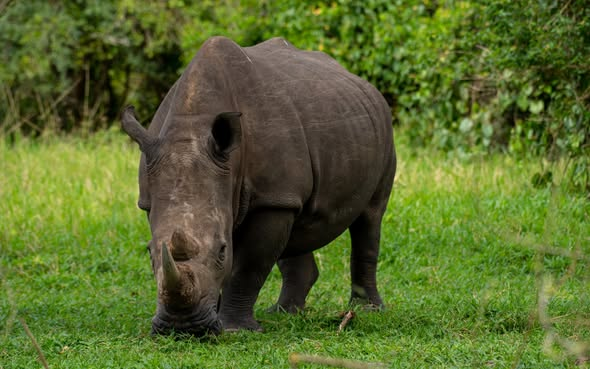
Kidepo — Efforts to restore rhinos to northern Uganda have reached a major milestone following the official handover of a newly established rhino sanctuary in Kidepo Valley National Park.
The 18.2 square kilometre fenced sanctuary was last week formally handed over to the Uganda Wildlife Authority (UWA), marking a key step in efforts to reintroduce rhinos to the park after more than four decades.
The facility was developed to support the country’s National Rhino Conservation and Management Strategy, which seeks to restore rhino populations in protected areas where the animals historically roamed.
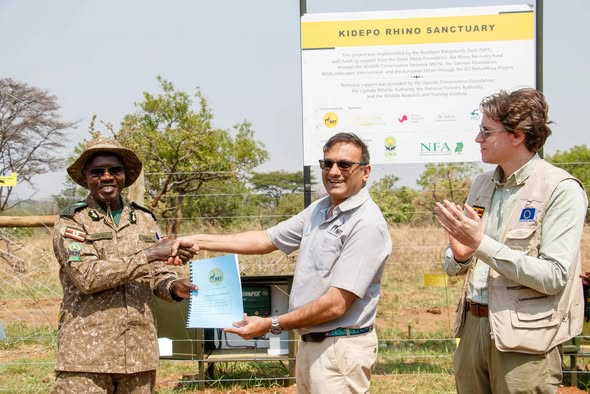
During the handover ceremony, Mr. Vishal Shah, Chief Executive Officer of the Northern Rangelands Trust, presented the sanctuary completion report to Mr. Charles Tumwesigye, Commissioner for Field Operations at UWA.
Conservation partners say the sanctuary will pave the way for the relocation of white rhinos from the Ziwa Rhino Sanctuary to Kidepo Valley National Park in the coming weeks.
Officials noted that the introduction of the more manageable white rhinos will help build Uganda’s capacity to manage the species before black rhinos are eventually reintroduced to the landscape.
Rhinos disappeared from Kidepo and other parts of Uganda more than 40 years ago due to poaching and insecurity, and conservationists see their return as a significant step toward restoring the country’s biodiversity.
The sanctuary fence was funded by the Northern Rangelands Trust with support from several partners, including the Great Plains Foundation, Rhino Recovery Fund, WildLandscapes International, the Uganda Conservation Foundation and the European Union through the NaturAfrica programme.
Local communities are also playing a key role in the initiative. Members of the Morungole Community Conservancy participated in constructing the sanctuary fence and continue to support broader conservation activities in the area. Conservation groups say the project highlights the importance of collaboration between government, conservation organisations and local communities in restoring endangered species and protecting Uganda’s natural heritage.