

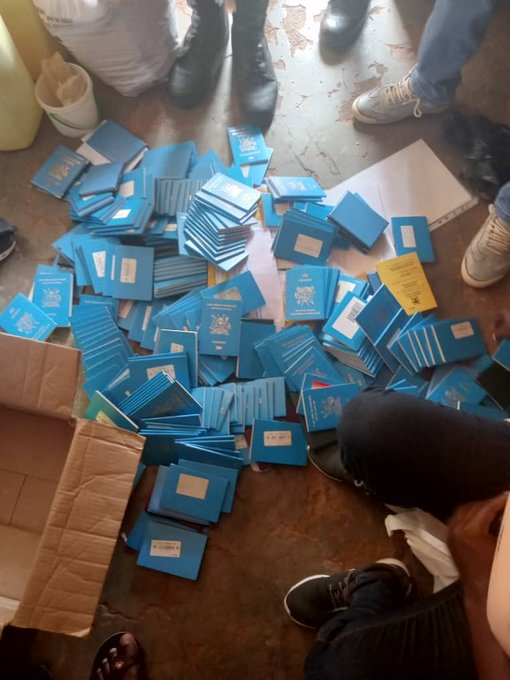
Police in eastern Uganda have arrested a woman in connection with an alleged passport trafficking racket, recovering more than 260 travel and immigration documents during a weekend intelligence-led operation.
According to the Uganda Police Force, officers raided a residence in the Orwadai neighbourhood in Soroti on February 22, 2026, arresting Abilo Tesira. Authorities say the suspect was allegedly distributing passports, certificates of good conduct, and yellow fever vaccination cards from her home.
Police reported that a total of 261 documents were seized in the operation. Earlier reports by NTV Uganda indicated that more than 160 passports and other travel documents had initially been recovered, with investigations ongoing to establish the full scope of the operation.
Tesira remains in custody as investigators work to trace the origin of the confiscated documents and determine whether a wider network of accomplices is involved. Authorities say efforts are underway to identify individuals who may have obtained the documents illegally and to establish how the materials were acquired.
The arrest comes amid growing public concern over delays and alleged corruption within Uganda’s passport processing system. In recent months, citizens have taken to social media platform X to share frustrations about long waiting times, claims of bribe demands, and difficulties accessing legitimate travel documents.
The developments also follow recent leadership changes at the Directorate of Citizenship and Immigration Control, the government body responsible for issuing passports and managing immigration services. The Directorate has previously acknowledged backlogs and pledged reforms aimed at streamlining services and restoring public confidence.
Police have urged members of the public to follow official procedures when applying for travel documents and to report individuals offering immigration services outside authorized channels.
Investigations into the Soroti case are ongoing, and authorities say further arrests may follow as they unravel what they describe as an organised scheme to traffic official documents.