

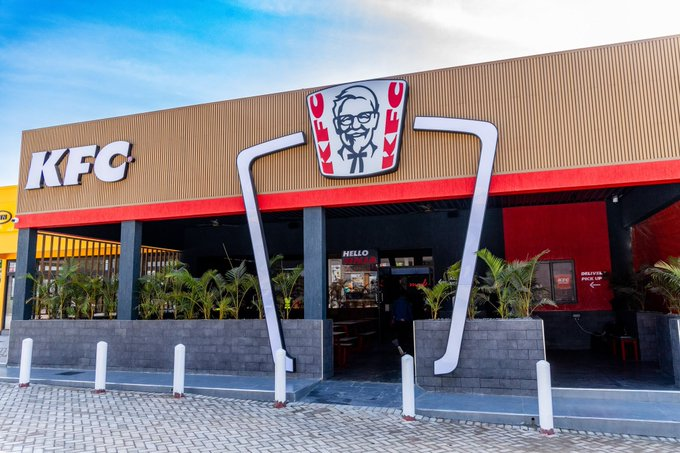
A social media post by KFC Uganda asking whether it should open a restaurant in Bamutakudde has triggered an enthusiastic response from the village’s chairman, Solomon Serwanjja, who offered the fast-food chain free land on a 10-year lease.
KFC Uganda asked its followers on X: “Should we open KFC in BAMUTAKUDDE?”
The seemingly playful question quickly turned into a conversation about local economic development after Serwanjja responded with an offer of land, arguing that a KFC outlet could create jobs, provide a market for farmers and stimulate other businesses in the growing village in Mukono District, east of Kampala.
Serwanjja, a journalist-turned-local leader, has been promoting an ambitious five-year development agenda for Bamutakudde, built around clean water, youth skills development, environmental conservation and higher household incomes.
His intervention also comes shortly after he unveiled the village’s new official logo and brand manual.
“A NEW CHAPTER FOR BAMUTAKUDDE!” Serwanjja announced on X while unveiling the branding.
“We are proud to unveil the official Brand Manual & Logo for Bamutakudde Village. This is more than a logo — it’s our identity, our story, our unity and our future.”
The branding initiative is part of an attempt to give the village an identity beyond its administrative function and to use that identity to attract investment, organise residents and promote local initiatives.
The chairman’s approach is unusual for a village-level leader in Uganda, where Local Council leadership is often associated with resolving neighbourhood disputes, signing letters and handling basic administrative matters.
But Serwanjja appears to be testing a different idea: can an LC1 chairman market an entire village?
His Bamutakudde campaign has already attracted attention online, with residents participating in community clean-ups and tree-planting activities. The village has reportedly planted 2,000 tree seedlings as part of its environmental programme.

The proposed KFC outlet has therefore become more than a joke about fast food.
Serwanjja’s argument is that the arrival of a major restaurant brand could have economic effects beyond the restaurant itself. A new outlet would require workers, suppliers, transport services and potentially locally sourced agricultural products.
Residents have joined the online conversation, with some joking about whether traditional Ugandan foods such as luwombo could eventually find their way onto the menu. Others suggested that KFC could be renamed BFC — Bamutakudde Fried Chicken.
There were also more serious voices calling for greater support for Ugandan-owned food businesses rather than relying exclusively on international brands.
The debate exposes an interesting contradiction in the language of rural development.
For decades, development has often been imagined as something that arrives from somewhere else: a supermarket, a factory, a foreign investor, a government project.
But what if development begins with the village itself deciding what it wants to become?
That appears to be the wager behind Bamutakudde’s new branding.
The village has also recently received a major agricultural boost, with Serwanjja announcing that Uganda Prisons Commissioner General Dr Johnson Byabashaija donated one tonne of maize seed to residents as the planting season began. Serwanjja said the donation would support food security and household incomes.
The KFC proposal remains, for now, an offer and a social-media conversation rather than a confirmed investment.
KFC Uganda has not announced plans to establish an outlet in Bamutakudde.
Still, the exchange has achieved something that many development plans struggle to achieve: it has made people talk about a village as a place with an economic future.
And perhaps that is where the real story lies.
A logo cannot create jobs. A fast-food restaurant cannot, by itself, transform a village. But when a community begins to think of its name, land, farmers, young people and businesses as parts of one economic identity, the humble village suddenly becomes something else.
A brand.
A proposition.
A place that can make an offer.