
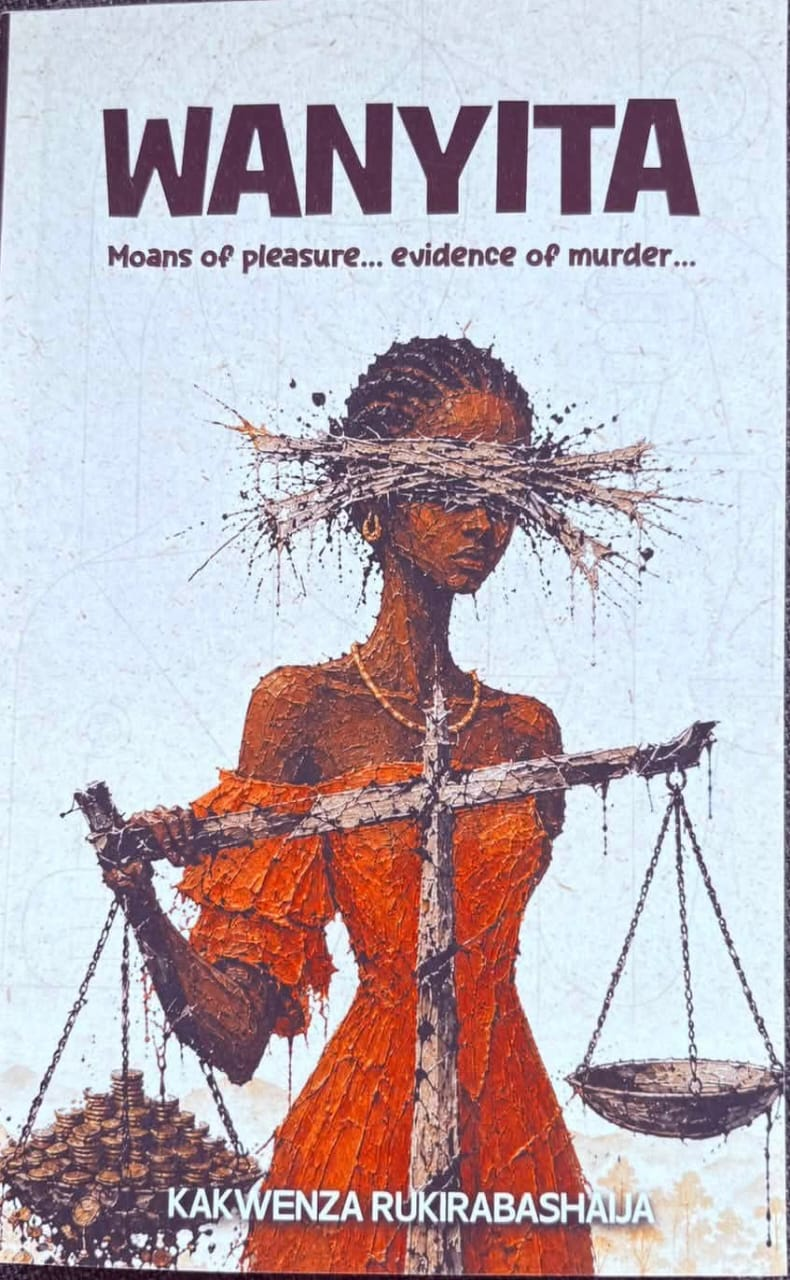
KAMPALA — Ugandan writer Kakwenza Rukirabashaija, best known for politically charged and socially critical fiction, is taking his writing in a markedly different direction with the release of WANYITA, an adult erotic romance that he says eventually develops into a legal thriller.
Rukirabashaija announced the book in a statement accompanying its release, describing it as a departure from the social protest literature that has defined much of his career.
“Every writer is known for a specific genre yet other stories quietly gather in the margins over time,” he wrote. “I made my name in social protest literature (four titles strong). But erotic writing has been steadily filling the well of my pen, and my publisher finally decided it was time to let it loose.”
He warned prospective readers that the novel is intended strictly for adults because it contains numerous explicit sexual scenes.
“WANYITA is an erotic romance that ends in a sharp legal thriller,” Rukirabashaija said, adding: “Handle with care. Good luck.”
The book represents a significant shift from the political fiction for which the author has gained international attention.
Rukirabashaija is the author of The Greedy Barbarian, Banana Republic: Where Writing is Treasonous and The Savage Avenger, works associated with political satire, authoritarianism, corruption and social protest. Academic and literary catalogues classify The Greedy Barbarian and The Savage Avenger as fiction, with the latter specifically categorised under political fiction.
His writing career has also been closely connected to questions of freedom of expression. He was named the 2021 PEN Pinter International Writer of Courage and later received the 2023 Václav Havel International Prize for Creative Dissent.
A departure from political satire
With WANYITA, Rukirabashaija appears to be testing another territory: desire.
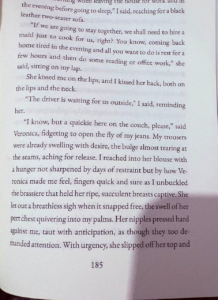
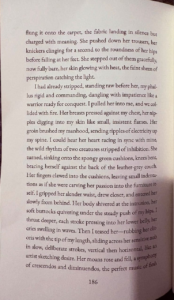
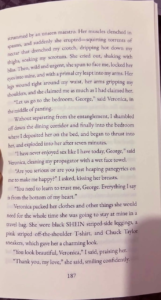
The excerpts released from the novel centre on George and Veronica and depict an intensely sexual relationship before the story moves back into the rhythms of domestic life and romance.
The author has deliberately marketed the book as adult fiction rather than attempting to hide its sexual content.
That marks an interesting departure for a writer whose public literary identity has largely been built around confronting political power.
Rukirabashaija’s earlier novels frequently use fiction as a weapon against political and social realities. The Savage Avenger, for example, deals with imprisonment, torture, military power and political repression. Google Books lists its subjects as political fiction and identifies the author as a Ugandan lawyer and award-winning novelist.
WANYITA, by contrast, begins from the private sphere: intimacy, attraction and relationships.
Yet the promise of a “sharp legal thriller” suggests that Rukirabashaija has not abandoned conflict. He may simply have moved the battlefield from the state to the bedroom — and eventually to the courtroom.
From protest to erotic fiction
The shift also raises a larger question about how writers become trapped by their own reputations.
Once a novelist becomes associated with a particular political identity or genre, readers begin to expect the next book to confirm what they already know about the author.
Rukirabashaija appears determined to resist that expectation.
His announcement suggests that erotic writing was not a sudden experiment but something that had been developing alongside his better-known work.
“Erotic writing has been steadily filling the well of my pen,” he said.
The metaphor is revealing. The writing was already there; the publisher simply decided it was time to open the well.
The release also expands the range of contemporary Ugandan fiction being published outside the more familiar literary categories of political satire, social realism and historical fiction.
And perhaps that is the more interesting story.
A writer known for challenging political power is now asking readers to enter a completely different kind of world — one in which desire, intimacy, romance and law collide.
Whether readers see WANYITA as a genuine literary departure or another way for Rukirabashaija to provoke his audience remains to be seen.
But one thing is clear: the novelist who became known for writing about the politics of power is now writing about another form of power entirely — desire.