

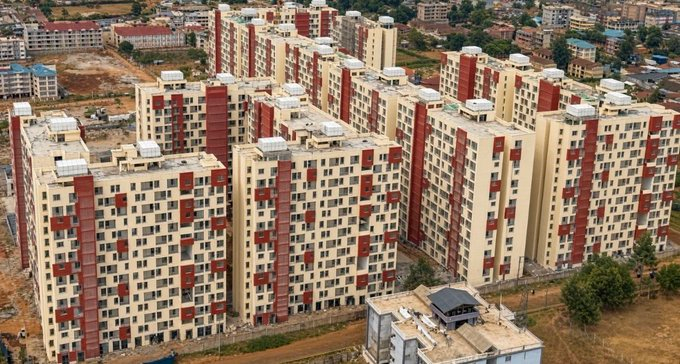
Some Ugandan social media users have called for a “presidential swap” with Kenya after President William Ruto handed over 2,157 homes under the country’s affordable housing programme, sparking debate about housing costs and government priorities across the two East African neighbours.
The homes, located in Eldoret in western Kenya, are part of a government initiative intended to help lower-income earners become homeowners through relatively low-priced units and monthly payment plans, according to Kenyan publication Tuko.co.ke.
The estate, valued at about $41 million, includes shops, a kindergarten, playgrounds and a swimming pool.
The cheapest units, described as one-room homes, cost about $4,900, with monthly repayments starting at approximately $29. Two-bedroom apartments cost around $15,400, while three-bedroom units are priced at about $23,100.
The development has attracted attention from Ugandan social media users, some of whom have praised Ruto and suggested that Uganda should exchange President Yoweri Kaguta Museveni for the Kenyan leader.
The comments have fuelled online comparisons between the two governments, particularly over efforts to expand access to housing and improve living conditions for ordinary citizens.
However, the Kenyan housing programme has also drawn criticism at home, with some Kenyans questioning whether the units are genuinely affordable for low-income households already facing high taxes and rising living costs.
The debate reflects the challenge governments face in balancing ambitious housing projects with the financial realities of the people they are intended to serve.
While the Ugandan comments appear to express admiration for the scale of Kenya’s housing development, the Kenyan criticism highlights concerns about whether the repayment arrangements are within reach of the poorest households.
The comparison has also brought renewed attention to the wider question of affordable housing in East Africa, where many households struggle to secure decent accommodation amid limited incomes and rising urban living costs.