
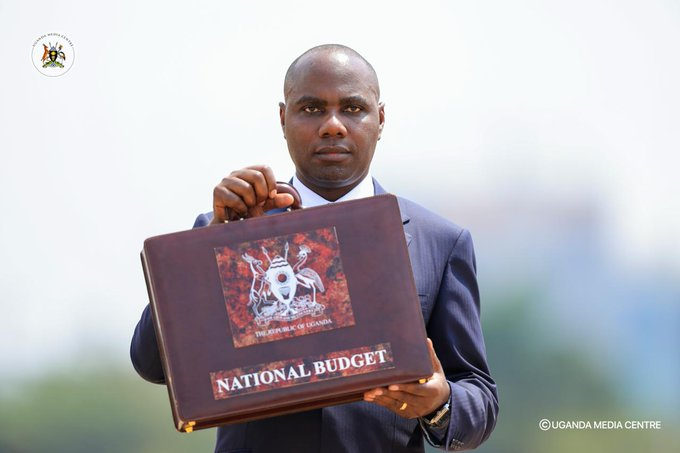
KAMPALA — Uganda’s Shs84.4 trillion national budget for the 2026/27 financial year lays out an ambitious roadmap aimed at propelling the economy into double-digit growth territory, with government prioritising security, infrastructure development and productive sectors under the Agriculture, Tourism, Minerals and Science & Technology (ATMS) agenda.
An analysis of the budget allocations presented by the Ministry of Finance and sector expenditure figures released by government shows a fiscal strategy centred on what officials describe as “production and protection” — combining heavy investment in economic growth sectors with significant spending on security and strategic infrastructure.
The budget comes at a pivotal moment as Uganda prepares for commercial oil production, which government expects to accelerate economic expansion to 10.2 percent and provide additional resources for industrialisation and wealth creation.
Security and Infrastructure Take Lion’s Share
The largest sector allocation goes to security, which has been allocated Shs10.21 trillion, making it the single biggest spending item among the sectors highlighted in the budget.
Government argues that the investment is necessary to maintain national stability, protect strategic infrastructure and support regional peace and security initiatives, particularly as Uganda enters the oil production era.
Transport infrastructure follows closely with Shs8.79 trillion earmarked for roads, bridges, the Standard Gauge Railway (SGR), and oil-related transport corridors.
Officials say these investments are intended to lower logistics costs, improve market access and strengthen Uganda’s competitiveness within the East African region.
Combined, the security and transport sectors account for nearly Shs19 trillion, underscoring government’s continued reliance on infrastructure and stability as foundations for economic growth.
Education Outpaces Health
Education emerges as the largest social sector beneficiary, receiving Shs6.66 trillion, complemented by an additional Shs568.65 billion earmarked for salary enhancement for primary and arts teachers.
The additional wage allocation reflects government’s efforts to address longstanding concerns over disparities in public sector pay and improve staff motivation within the education system.
Combined spending on education exceeds Shs7.2 trillion.
Health has been allocated Shs5.23 trillion, maintaining its place among the top-funded sectors. However, analysts note that the sector faces increasing demands ranging from medical supplies and infrastructure development to staffing costs and disease surveillance.
While the allocation remains substantial, health sector advocates argue that growing population pressures and emerging public health threats will continue to stretch available resources.
ATMS Strategy Anchors Growth Agenda
A major feature of the budget is the continued prioritisation of the ATMS agenda, which government has identified as the primary vehicle for economic transformation and wealth creation.
Wealth creation programmes receive Shs2.49 trillion, funding interventions such as the Parish Development Model (PDM), Emyooga and agricultural financing schemes designed to move households from subsistence production into the money economy.
Agro-industrialisation has been allocated Shs2.26 trillion, supporting mechanised farming, irrigation, value addition, storage infrastructure and climate-resilient agricultural production.
The allocations reinforce government’s commitment to transforming agriculture from a subsistence activity into a commercial enterprise capable of driving exports, industrialisation and job creation.
Science, Technology, Innovation, ICT and the creative economy will receive Shs1.14 trillion, reflecting increasing government interest in supporting digital transformation, innovation and youth-led enterprises.
Tourism sector development has been allocated Shs567.32 billion, while mineral-based industrial development receives Shs473.51 billion as government seeks to maximise value addition before exporting raw minerals.
Collectively, the ATMS sectors account for more than Shs6.9 trillion in direct funding.
Powering Industrialisation
To support manufacturing and industrial growth, government has allocated Shs2.07 trillion to energy development.
The funding is expected to support electricity transmission networks, rural electrification projects and additional generation capacity through renewable and conventional energy sources.
Manufacturing and industrial development will receive Shs1.03 trillion, complementing energy investments and supporting industrial parks, local production and import substitution initiatives.
The sector is also expected to benefit from new tax measures aimed at protecting domestic industries, including higher environmental levies on imported second-hand clothing and other products competing with local manufacturers.
Water, sanitation and environmental management has been allocated Shs1.013 trillion, reflecting its importance not only as a social service but also as a critical component of industrial and urban development.
Governance and Climate Preparedness
Among governance institutions, legislation and oversight functions will receive Shs1.23 trillion, covering Parliament and related oversight bodies.
The administration of justice sector has been allocated Shs665.55 billion to support judicial reforms, reduce case backlogs and expand access to courts.
Government has also increased emphasis on disaster preparedness and climate resilience.
Management of natural disasters receives Shs494.08 billion, while the contingency fund has been allocated Shs361.88 billion.
Together, the two votes amount to nearly Shs856 billion set aside for emergency response, disaster management and climate-related interventions.
Social Protection Remains Smallest Allocation
Despite increased focus on inclusive growth, social protection remains one of the least funded sectors in the budget, receiving Shs173.55 billion.
The allocation is significantly lower than spending on infrastructure, security and productive sectors, reflecting government’s preference for growth-oriented investments rather than direct welfare interventions.
Economists note that while economic expansion can create opportunities and jobs, limited social protection spending may leave vulnerable populations exposed to economic shocks.
A Budget Built on Growth Expectations
The FY2026/27 budget reflects government’s confidence that Uganda is on the verge of a major economic transition driven by oil production, industrialisation and commercial agriculture.
By concentrating resources in security, transport infrastructure and the ATMS sectors, policymakers are betting that investments in production and competitiveness will generate sustained growth and accelerate the country’s journey toward middle-income status.
Whether the strategy delivers the anticipated 10.2 percent growth will depend on the timely implementation of projects, efficient use of public resources and the ability of productive sectors to convert public investment into jobs, exports and higher household incomes.