

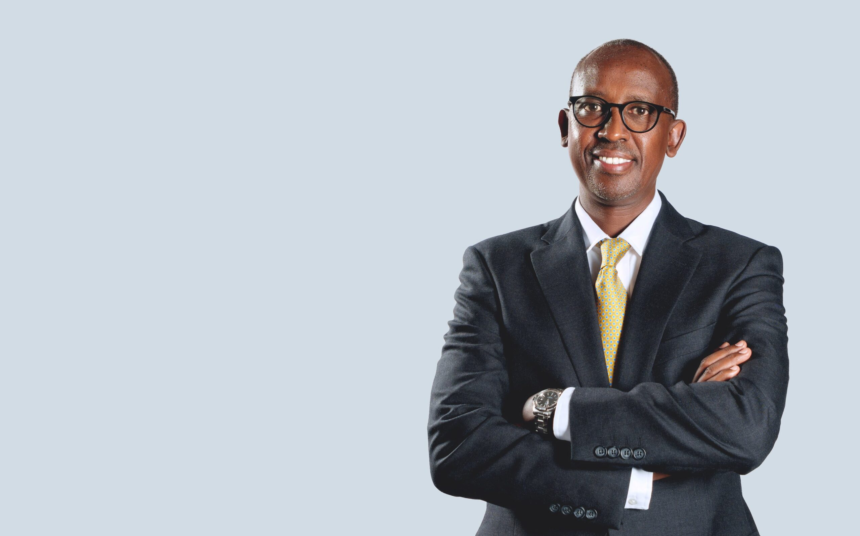
Kampala — President Yoweri Kaguta Museveni’s son-in-law and senior presidential advisor Odrek Rwabwogo has warned that fear and restricted public debate could weaken Uganda’s efforts to transform into a $500 billion economy by 2040.
Rwabwogo, who shared his views on social media, argued that economic transformation requires citizens who are confident, engaged and free to exchange ideas.
“Fear disables citizens. Silence weakens institutions. Suppressed opinion kills national confidence,” Rwabwogo wrote.
He added that Uganda’s growth would depend on the ability of citizens and institutions to communicate openly, listen to different viewpoints and exercise restraint.
“We grow by listening, talking to each other, and exercising restraint. Uganda must keep communicating freely,” he said.
The remarks come as Uganda pursues an ambitious target of expanding its economy from about US$50 billion to US$500 billion by 2040. Government’s growth strategy is anchored on four priority areas known as ATMS — agro-industrialisation, tourism development, mineral development, and science, technology and innovation.
The government says achieving the target will require rapid economic expansion, increased investment, stronger exports and improvements in productivity across key sectors.
Rwabwogo, who has often spoken on economic transformation, entrepreneurship and private-sector development, argued that confidence among citizens is critical for national progress.
His comments have attracted mixed reactions, with some observers welcoming the message as a call for stronger civic engagement, while others questioned whether broader institutional reforms would be necessary to match the vision of an open and innovative economy.
The discussion comes amid ongoing debate about Uganda’s civic space, freedom of expression and the relationship between political stability and economic growth.
Economic analysts have previously noted that while Uganda’s $500 billion ambition is achievable, it will require not only investment in infrastructure and productive sectors but also stronger governance systems, accountability and an environment that encourages innovation.
Rwabwogo said national transformation cannot happen where citizens are afraid to express ideas or participate in public conversations.
“Uganda must keep communicating freely,” he emphasized, linking open dialogue to the country’s broader development aspirations.
The government’s economic blueprint identifies agro-industrialisation, tourism, minerals and technology as the engines expected to drive the country’s next phase of growth.