

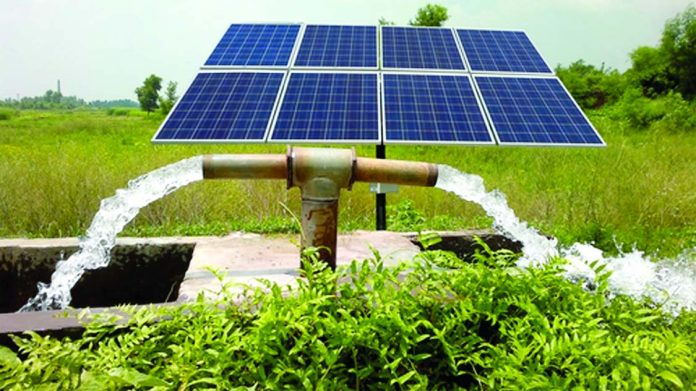
KAMPALA, Uganda — Parliament has approved a government proposal to borrow Shs734 billion (€168.9 million) to finance the second phase of a nationwide solar-powered irrigation programme aimed at boosting agricultural production and enhancing resilience to climate change.
The funding, which will be obtained from UK Export Finance and Citibank, will support the installation of 427 solar-powered irrigation systems in selected agricultural districts across Uganda.
Presenting the proposal to Parliament, State Minister for Finance (General Duties) Henry Musasizi said the project seeks to reduce farmers’ dependence on unreliable rainfall by providing sustainable irrigation solutions powered by renewable energy.
Musasizi told legislators that the project builds on the achievements of Phase I, which introduced solar-powered irrigation systems in several districts and improved access to water for agricultural production.
He said the second phase will prioritize drought-prone regions and key agricultural value chains, helping farmers increase productivity, improve food security, and boost household incomes.
“The project is intended to support year-round agricultural production by ensuring reliable access to irrigation water, particularly in areas affected by prolonged dry spells,” Musasizi said.
The borrowing request, however, attracted scrutiny from Members of Parliament who questioned the performance and accountability of the first phase of the programme.
Leader of the Opposition Joel Ssenyonyi called for a comprehensive audit of the initial installations, arguing that Parliament needed assurances that public funds invested in the project had delivered the intended results.
Ssenyonyi raised concerns over whether all previously installed irrigation systems were operational and providing value for money.
Other legislators echoed similar concerns, pointing to reports of maintenance challenges and underutilization at some irrigation sites. They urged government agencies to strengthen monitoring, supervision, and maintenance mechanisms to ensure the sustainability of the new investments.
Despite the reservations, Parliament approved the loan request, with government maintaining that expanding irrigation infrastructure is critical to transforming agriculture and mitigating the effects of climate change.
Officials say the 427 new solar-powered irrigation systems will benefit thousands of farming households across the country, particularly in regions that frequently experience drought and erratic rainfall.
The project forms part of Uganda’s broader strategy to modernize agriculture, increase productivity, and support farmers to adapt to changing weather patterns while promoting the use of clean and renewable energy technologies.