

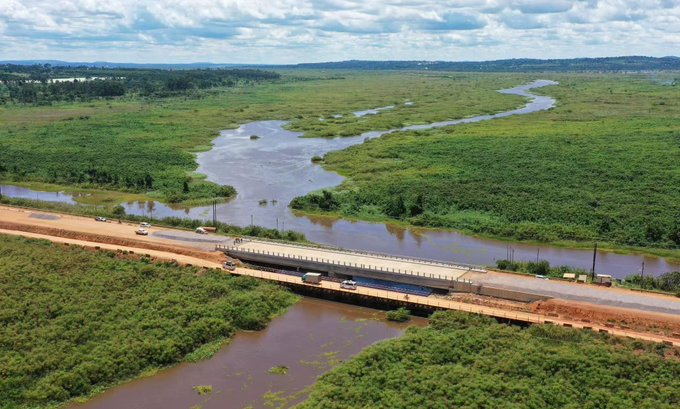
The new Katonga Bridge on the Kampala-Masaka Highway has been officially commissioned, restoring a vital transport link between central and western Uganda following works aimed at improving the road’s resilience to flooding.
Works Minister Fred Byamukama commissioned the 2.7-kilometre elevated bridge on Saturday, October 17, 2026. The project was undertaken by China Communications Construction Company (CCCC) at a cost of Shs191 billion, covering the bridge and improvements to nearby road sections.
The elevated structure was designed to withstand flooding, a recurring challenge around the Katonga crossing that has disrupted traffic and affected movement along the busy highway.
The bridge has a projected design life of 120 years, placing responsibility on engineers and contractors to ensure the structure meets its intended lifespan.
Speaking at the commissioning, Byamukama challenged engineers to deliver infrastructure that meets the specified standards and lasts for its projected service life.
He also urged motorists to observe traffic regulations and exercise caution on the roads, warning against behaviour that contributes to road crashes and fatalities.
The reopening is expected to improve the movement of passengers and goods along the Kampala-Masaka corridor, an important route for trade and transport connecting the capital to southwestern Uganda and neighbouring countries.
The crossing had become a major concern for road users after flooding disrupted traffic in the area, exposing the vulnerability of the highway to extreme weather.
Allan Ssempebwa Kyobe, a communications official, welcomed the completion of the project in a post on X on Saturday, saying the long-standing bottleneck at Katonga had been eliminated.
“The teams @MoWT_Uganda & @CCCC_Uga have delivered,” Ssempebwa wrote, referring to the Ministry of Works and Transport and the Chinese contractor.
The commissioning marks a major milestone for the highway, although the bridge’s long-term performance will depend on construction quality, maintenance and the effectiveness of measures to manage flooding around the crossing.