
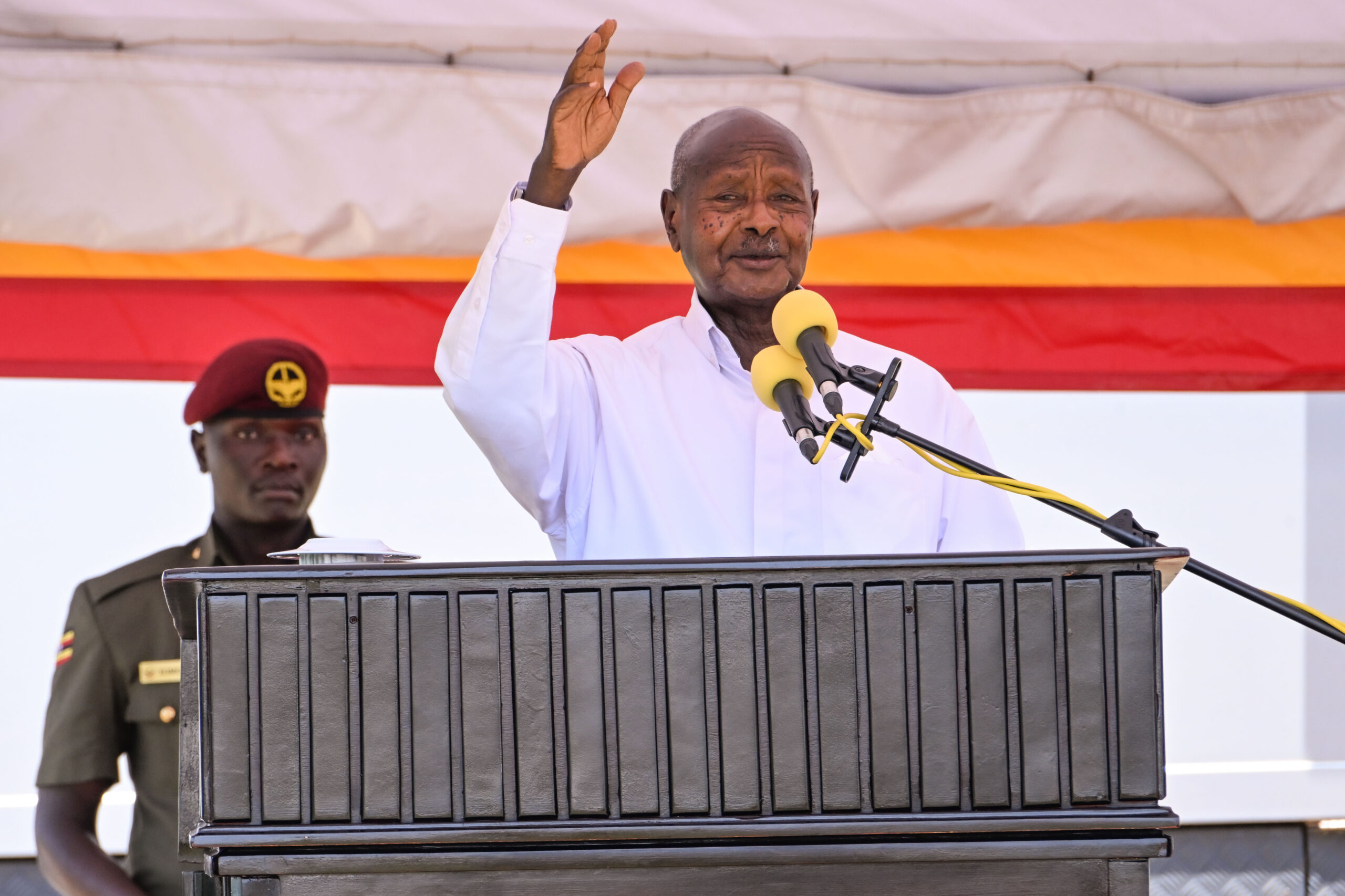
President Yoweri Museveni has publicly rejected what he described as a misrepresentation of the proposed Sovereignty Bill, cautioning legislators against expanding its scope beyond its original purpose of protecting Uganda’s policy independence.
The President’s remarks come amid growing scrutiny of the draft legislation, which had sparked concern across sections of the public due to perceived provisions touching on financial freedoms, private enterprise, and religious activity.
“That’s not the Sovereignty Bill I initiated,” Museveni said, distancing himself from the circulating version. He revealed that he had already engaged Hamson Obua alongside parliamentary committee leaders to realign the bill with its intended focus.
“I have talked to Hon. Hamson Obua and the Chairpersons of the relevant Parliamentary Committees to make the Bill concentrate on the sovereignty of policy-decision-making,” he stated, adding that it should not “meander” into unrelated domains such as private money transfers, business transactions, or church donations.
A Bill Under Pressure
The Sovereignty Bill has quickly become one of the most closely watched legislative proposals in Uganda, largely due to uncertainty surrounding its contents. While the government has framed it as a strategic effort to reinforce national decision-making authority, critics and observers have questioned whether its wording could allow broader state oversight.
Initial interpretations suggested the possibility of tighter control over financial systems, including remittances and private capital flows—an issue that raised alarm among Uganda’s business community and diaspora networks, which contribute significantly to the economy through foreign transfers.
Religious institutions also voiced concern over any perceived attempt to regulate donations, warning that such measures could interfere with constitutionally protected freedoms.
Museveni’s Strategic Repositioning
Museveni’s intervention appears designed to defuse these tensions while reasserting control over the legislative narrative. By drawing a clear boundary around the bill’s intent, the President is signaling that the government does not intend to interfere with core economic liberties or religious practices.
Political watchers say this repositioning is critical in maintaining Uganda’s image as an open economy, particularly at a time when the country is seeking to attract foreign investment and strengthen its regional trade position.
At the same time, Museveni’s emphasis on “policy-decision-making sovereignty” reflects a broader ideological stance he has maintained over the years—prioritizing national autonomy in governance, especially in the face of external political and economic pressures.
Parliament Faces a Balancing Act
With guidance now coming directly from the President, Parliament is expected to recalibrate the bill during committee-level deliberations. Hamson Obua is likely to play a central role in ensuring that government legislators adhere to the revised direction.
However, the process may not be straightforward. Lawmakers must strike a balance between crafting legislation that protects national sovereignty and ensuring it does not conflict with constitutional guarantees or disrupt economic stability.
Legal analysts suggest that vague or overly broad clauses could still create room for future interpretation, even if the bill is formally narrowed. As a result, the wording and structure of the final draft will be critical.
Broader Implications
Beyond its immediate legislative journey, the debate around the Sovereignty Bill highlights deeper questions about Uganda’s place in a globalized world. How the country defines sovereignty—particularly in economic and policy terms—will shape its engagement with international partners, financial institutions, and regional bodies.
Museveni’s latest remarks suggest a desire to pursue sovereignty without isolation—preserving the state’s authority in policymaking while keeping markets and institutions largely free from interference.
The Road Ahead
As consultations continue, attention will remain fixed on Parliament’s next steps. Stakeholders from the private sector, civil society, and religious groups are expected to maintain pressure for clarity and transparency.
For now, Museveni’s message is clear: the Sovereignty Bill should be a focused instrument of governance, not a sweeping tool that touches every aspect of public and private life.
Whether lawmakers fully align with that vision will determine not only the fate of the bill but also public confidence in the legislative process.