

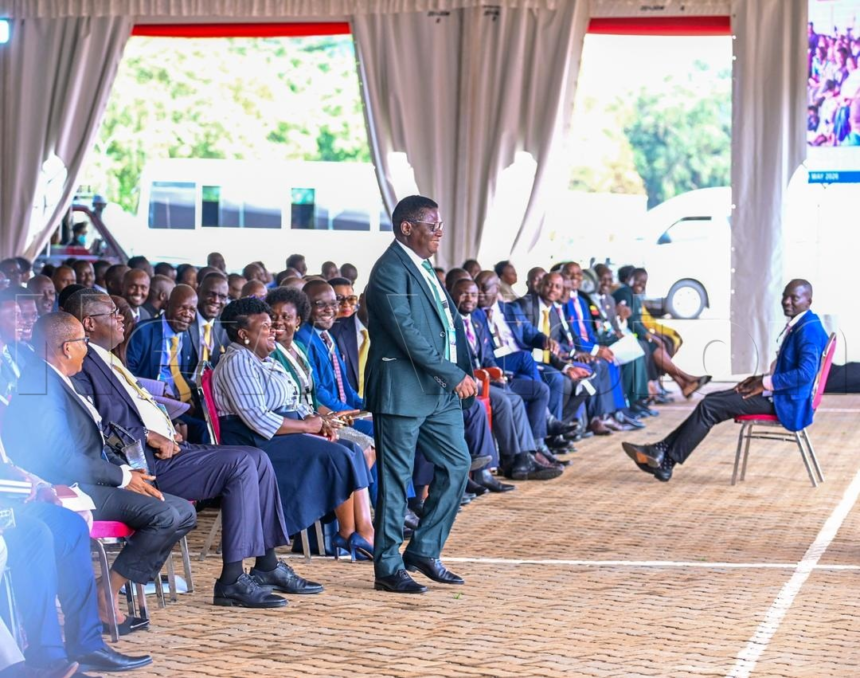
The Speakership election held at the Kololo Ceremonial Grounds has continued to generate political debate after Justice and Constitutional Affairs Minister Norbert Mao secured 15 votes in a contest ultimately dominated by the ruling party establishment.
While the election concluded with a decisive victory for Oboth Oboth of the National Resistance Movement, analysts say Mao’s showing, though numerically small, reflects lingering divisions and shifting alliances within Uganda’s broader political landscape.
The poll, conducted at Kololo Ceremonial Grounds, saw hundreds of ballot papers cast in a tightly managed parliamentary process. Officials confirmed that no abstentions were recorded, although three ballots were declared invalid during counting.
Mao’s 15 votes have since drawn attention from political commentators, with some interpreting them as symbolic rather than competitive. Others argue the result highlights the limited but persistent pockets of dissent within the political establishment, even in heavily dominated parliamentary contests.
Meanwhile, Oboth Oboth’s victory has been framed by supporters as a reinforcement of stability within the legislative leadership structure, particularly as the new Parliament prepares for a packed agenda involving governance reforms and institutional restructuring debates.
Opposition voices, however, are expected to question the electoral dynamics behind the Speakership vote, particularly the weight of party discipline versus individual parliamentary choice.
As discussions continue, the outcome at Kololo is increasingly being viewed not just as a leadership decision, but as a broader reflection of Uganda’s evolving parliamentary balance.